
Men Who Hate Women
Laura Bates, Simon & Schuster 2020
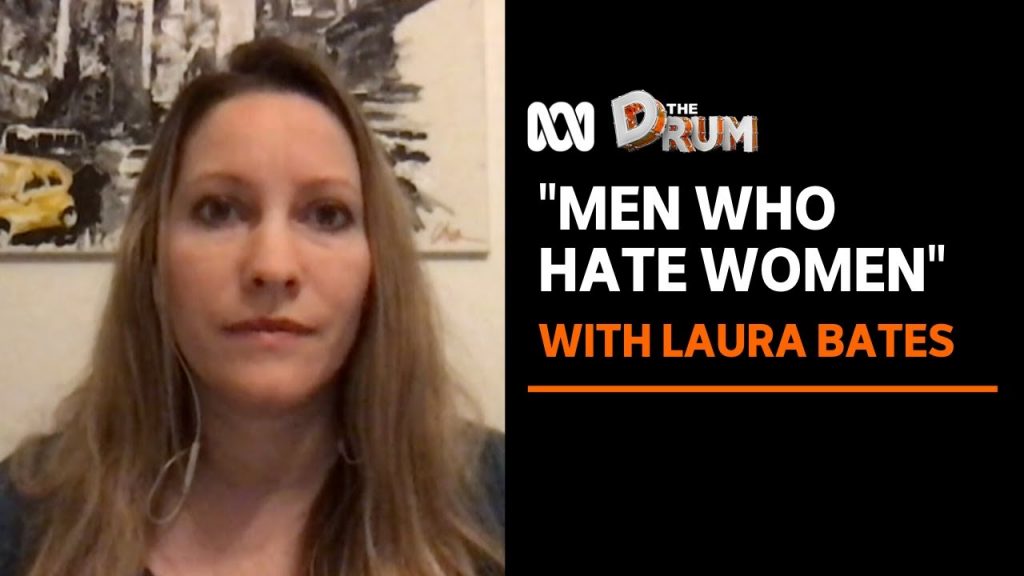
When I read Men Who Hate Women a few months ago it was like finding the missing link. So much of what was being reported in the news about women and girls’ daily experience seemed extraordinary, yet I didn’t doubt their testimony.
Take the overwhelming response to the ‘Everyone’s Invited’ website and the picture that emerged of the abuse and assaults that girls at school were having to put up with – even those at prestigious fee-paying schools. How could this behaviour be endemic in school populations when there must be a large cohort of intelligent, educated and independent mothers and sisters to counteract such sexist attitudes? And why are campus assaults so frequent, when they were rare occurrences back in the dark, unreconstructed days of the 1970s?
The answer lies in this book. When Laura Bates started her Everyday Sexism project, in which people (all people, not just women) were invited to contribute examples of sexism and inequality, she earned plaudits from the sisterhood and the media, and spawned a worldwide movement. She also unleashed thousands of messages from men describing how they’d like to rape and disembowel her. It was when she began to encounter growing misogyny among the boys in the schools she was speaking at, expressed in strikingly similar language from one establishment to another, that she realised it was time to investigate and expose the threat of online ‘grooming’ of boys and men into such attitudes, and to tackle it head on.
So she went undercover, adopting the persona of Alex, a young, white, 24-year-old man who had never had a girlfriend and spent a lot of time on the internet. Inevitably Alex encountered the ‘incel’ (involuntarily celibate) forums and tumbled down the rabbit hole into a topsy-turvy world where, he was assured, women were in control and they were evil. The posts confronting him were often accompanied by extreme pornographic images.
As Alex, Bates went on to explore the various manifestations of this misogyny: the incels’ murderous resentment, the sneering cruelty and deceit of the pick-up artists, the lethal callousness of the pornographers, the self-righteous anger of the men’s rights movements are just some of the forms it takes. But what was even more worrying was the way that these groups could drip-feed anodyne versions of their message into the mainstream media, leading to, for example, the widespread perception that many women lie about being raped.
From her work in schools, Bates could see all too clearly how pervasive sexist ideas were becoming. It’s devastating to read that many boys think that it’s normal for girls to cry during sex because that’s what they see on porn sites.
YouTube does not emerge from the book well. Its algorithms ensure that viewers are drawn deep into extremist sites in only a few clicks. Bates herself demonstrates how easily this happens: on opening YouTube she types ‘what is feminism?’ (as a confused young man wanting to know more might) into the search bar. One of the first links to come up is a speech by Emma Watson. So far so good. Bates watches the video then decides to ‘let the algorithm take me where it will.’
The next video is from The Rubin Report, a show that claims to be about free speech and big ideas, and it is an interview with notorious far-right commentator Milo Yiannopoulos in which he describes modern feminism as angry, bitter and profane, and dismisses campus rape statistics as nonsense. The fact that this interview appears on a mainstream media channel unchallenged legitimises the biased and inaccurate views expressed.
This is why no one has been talking about the extremism (to paraphrase the book’s subtitle) Bates has uncovered, the regular incitement to vulnerable and immature men to punish women for simply existing. For proof you have to look no further than the latest inspection report from Her Majesty’s Inspectorate of Constabulary and Fire and Rescue Services. Published this month, Police Response to Violence Against Women and Girls makes no mention of the source of much of this aggression. Likewise, the Home Office’s Tackling Violence against Women and Girls Strategy sets out plans to tackle specific online abuse, but does not address the insidious extremism that is creating a climate of fear for women.
The incitement to violence on the most extreme of these websites is nothing short of terrorism, yet nowhere is this acknowledged. Where is the equivalent of the Prevent programme, which aims to steer Muslim extremists away from radicalisation?
This must become a matter of public policy, yet there is resistance at every turn – hence this despairing Tweet: ‘Just over a year ago I suggested that Men Who Hate Women should be required reading on all teacher training courses. From the responses I got [you] would have thought I was advocating compulsory chemical castration.’
Bates’s book, well-researched, well-evidenced and well-argued, is a wake-up call, and it will be the worse for women if it is ignored. I should point out that since I decided to write this review, we have seen the murder of Sabina Nessa, leaving a traumatised family, women scared to go out of their front doors – and no doubt a class full of sad and confused primary school children.
Shocking.
I saw an interview with Laura Bates and could not believe what I was hearing . I felt almost ashamed at my ignorance of incel groups and their horrific views.
This is a book we should all read. I certainly will .
Thank you.
Thanks. The book is a real eye opener – a hard read for obvious reasons, but at the same time very readable, if you see what I mean.