
When did we all get so sentimental?
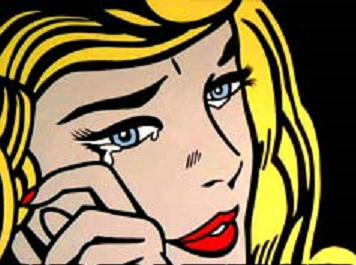
It’s another pernicious trend, and as with so many of them, it’s hard to know whether it has been generated by social media, or whether social media is merely broadcasting what was always present. It came as a double shock to me the first time I encountered a tweet that announced the death of the tweeter’s ‘baby girl’: I was shocked, thinking what a rare tragedy this was, and wondering whether it was down to some failure in neonatal care, a cruel accident, etc… and then I was shocked to discover that the baby girl in question was a dog!
Don’t get me wrong: I’m as moved by the death of a pet as the next person, and the day I had to take the family cat to be put down (kidney disease, as with so many elderly cats) was one of the worst in my life – the first cat is the deepest and all that. But she was never our baby girl.
Surely the appeal of pets is precisely that they are ‘other’: what makes the relationship so special is that a creature that is at some distant level wild, that experiences the world so differently from us, miraculously consents to share our lives.
The next piece of evidence for this tide of sentimentality is that few people actually die any more – no, they ‘pass’ instead. Not even ‘pass away’, in the parlance of my ancient C of E great-aunts. My first reaction is to wonder what they passed: the sugar? An exam? Wind? Even people who are not religious, for whom there is no other side to pass to, use this phrase.
On Radio 4, where they have to at least aim for some semblance of objectivity, they do at least use ‘died’, but have you noticed how often they prefix with the word ‘sadly’. Why ‘sadly’? Most listeners won’t know the deceased from a bar of soap, and it’s likely that in some cases their death may be source of indifference, if not joy, to those that knew them. (The phenomenon of someone dying alone, unlamented, and not being discovered for weeks, and then having crowds of mourners at their funeral is a gruesome product of this cult of sentimentality.)
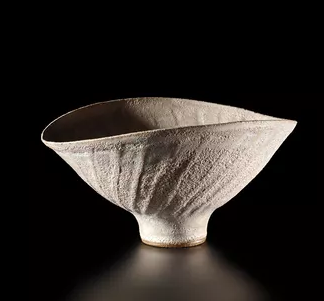
Exhibit C is the cloying element that has crept into programmes like Masterchef, The Great British Sewing Bee, The Great Pottery Throw Down, etc. These competitions are all, in the end, a test of someone’s craft in her chosen field, so why can’t they leave it at that? Surely there is enough of a thrill in watching a contestant who is developing a high degree of refinement in skill, taste and technique reach a new level and produce something truly unique and beautiful? But no, there always has to be ‘a journey’, and the contestant has to ‘put something of themselves’ into the product. Yet I doubt very much whether Lucie Rie included shreds of her soul in her ceramics (but happy to be proved wrong if anyone knows otherwise!).
Sentimentality is no substitute for real feeling – too many tyrants have demonstrated that.
I wholeheartedly agree that the euphemism pass and pass away is galling. As a Humanist celebrant we never use it even if tributes use it. Also the use of sadly when an elderly person has died should only be for those close to them, it is not a tragedy.
I won’t get started on the mantra ‘thoughts and prayers’ .
Good to hear from you, Jeanne, and thanks for flagging up another abomination!
Well said Verity.
Also in competitions cited above, why the need to hug at every opportunity?
I could go on. A nerve has been touched…
I totally agree about the hugs. They seem so phoney – you can almost see the floor manager herding them together!