
The Hard Way
Susannah Walker, Unbound
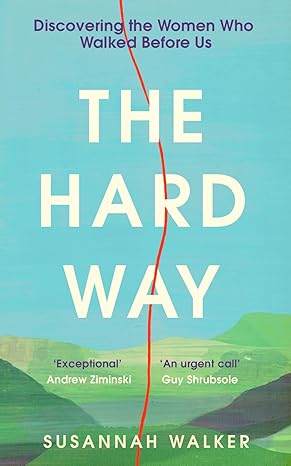
Any keen walkers stuck at home during the interminable rain that spring and early summer have brought could have made an escape via The Hard Way, 135 miles of the Ridgeway and the Harrow Way, with all their resonant history, in the company of its curious, questioning and challenging author.
For Susannah Walker, freedom is to be found on these high, largely deserted tracks, with a commanding view in all directions: at one point she is able to take in 70 miles of coastline with one sweep of her eyes. The rhythm of the book – the ascent through unlovely edgelands of carpark and big shed retail buildings to open skies and solitude – is deeply satisfying. But this solitude echoes with the sounds of the past.
It is extraordinary to discover that the tiny nondescript village of Weyhill once hosted the biggest sheep fair in the country, with over 100,000 of them, and many other animals besides, being sold in one day. Now the farmers, labourers, hawkers, fortune tellers, domestics seeking a new position are long gone. The fair ceased to operate in 1957 – just yesterday from Walker’s perspective, for the hill forts that punctuate these ancient tracks are far older, and it is harder to unravel their significance. All too often, academic male groupthink ascribes them a defensive purpose, whereas analysis of the topography would suggest otherwise. Walker invites us to think of them as Bronze Age service stations: points of refuge for travellers roughly a day’s walk apart.
Walker delights in the way time is telescoped out on these tracks, containing simultaneously lives lived thousands of years apart, and it is her explicit mission to shed light on the women who walked these tracks, but whose presence has been obliterated by history.
Way back in the 17th century Celia Fiennes – mostly on horseback and riding sidesaddle – travelled to most of the counties in England under the pretext of needing to visit spas, writing her journal as she went. In the 20th century we find a group of creative women whose spark was extinguished by their husbands’ practice of moving them to substandard accommodation in the middle of nowhere, inseminating them, and then leaving for a more stimulating, and often more comfortable, existence elsewhere.
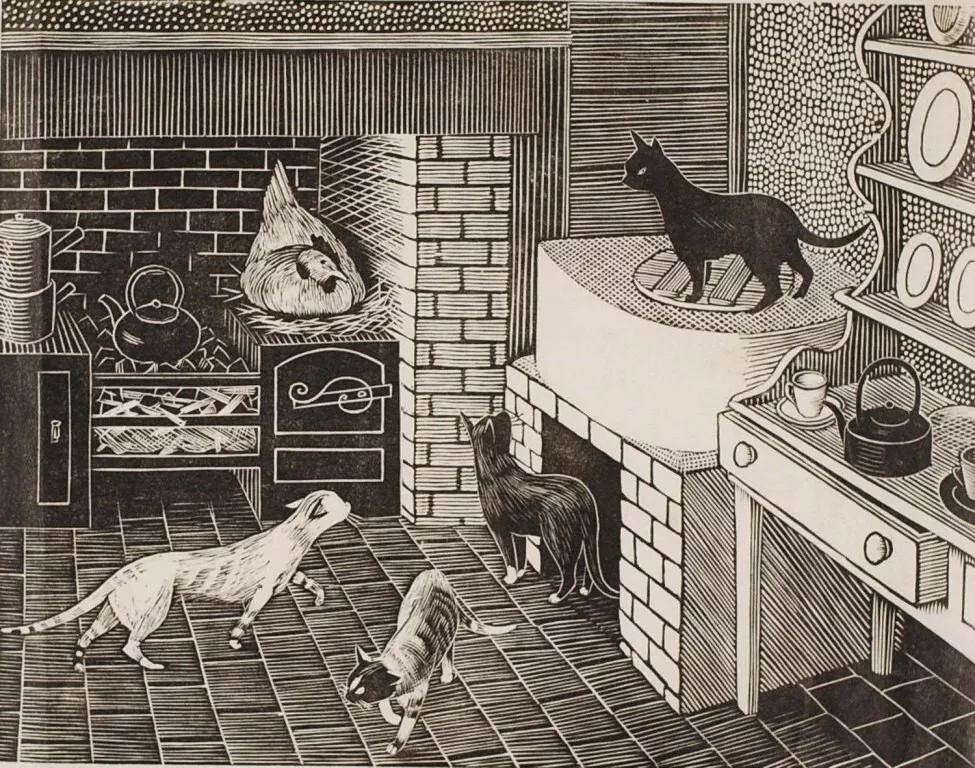
I knew this had been the fate of Tirza Garwood, wife of artist Eric Ravilious (don’t miss her exhibition at Dulwich Picture gallery later this year). Ravilious loved the chalk downs, and most people will have seen his watercolours of this landscape whether they are aware of it or not. But after marrying him in 1930, Tirza never produced another engraving. The wives of John Piper and Paul Nash found themselves similarly hobbled, and when it comes to Penelope Betjeman, scales fall from the reader’s eyes like confetti: ‘Throughout their marriage Betjeman bullied and abused his wife. His bolthole in London enabled him to indulge his infatuations and affairs, and there he ate lavishly and drank champagne while not giving Penelope enough to run the house properly. When back he was demanding , filling the house with guests and complaining endlessly about the food and the smell of cooking and the children…’
Walker is an erudite yet passionate guide to these landscapes, conjuring up the freedom and the links to our deepest past that they offer, and reclaiming women’s right to walk out of the door, over the hills and far away.
So much in this article to ponder upon!
I want to read this book for many reasons. The Bronze Age service stations rather than defences really strikes a chord.
Thanks Verity.
It really makes me want to get out walking more. I had no idea there were so many hill forts around!