
Now you don’t
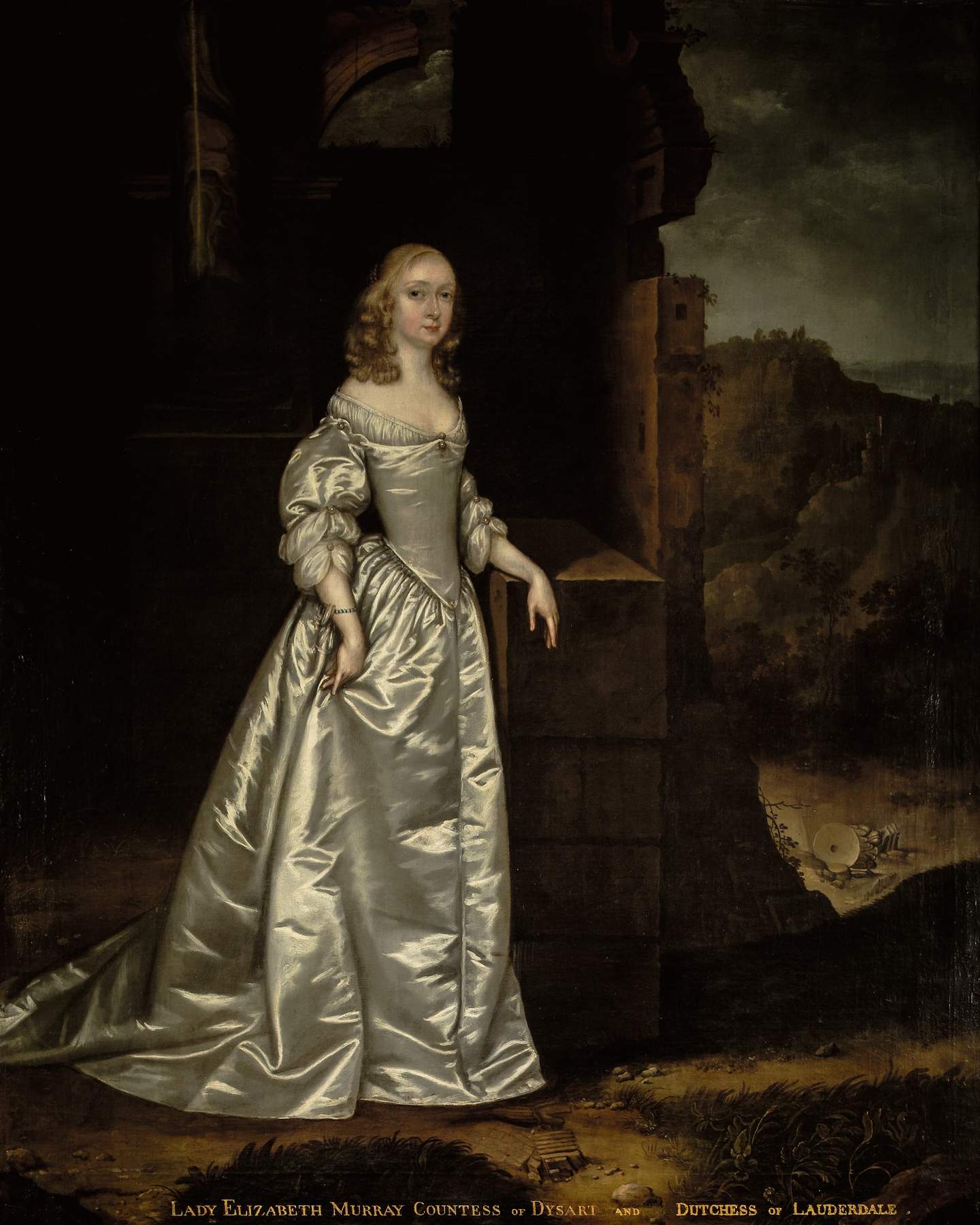
The unspoken subtext of the current Tate Britain exhibition Now You see Us: Women Artists in Britain 1570-1920 reminds us how over the centuries women’s art has been ignored, disposed of, ridiculed or ascribed to male members of their families.
The exhibition celebrates over 100 women who forged public careers as artists and used their talent and skills to earn a livelihood. They challenged what it meant to be a working woman of the time by going against society’s expectations – having commercial careers as artists and taking part in public exhibitions.
Including over 150 works, the show dismantles stereotypes surrounding women artists in history, who were often thought of as amateurs. Determined to succeed and refusing to be boxed in, they daringly painted what were usually thought to be subjects for male artists: history pieces, battle scenes and the nude.
The exhibition highlights how these artists championed equal access to art training and academy membership, breaking boundaries and overcoming many obstacles to establish what it meant to be a woman in the art world.
The curators of the exhibition have done an excellent job, charting the achievements across five centuries, and introducing to the lay person, including this dame, many women artists I had not heard of. How much does the average art lover know of Susanna Horenbouf (1503-1554) or Levina Teerlinc (1510-1576)? They were daughters of Flemish manuscript illuminators and arrived in England to work at the court of Henry VIII. Unfortunately, although Horrnbouf’s skill was admired by Albrecht Dürer, none of her works have been identified, and those attributed to Teerlinc are not certain.
A century later in 1658, historian William Sanderson produced a publication listing contemporary artists practising in England, naming just four women working in oil paint: Joan Carlile, Mary Beale, Sarah Broman and Anne Wemyss. Carlile and Beale are believed to be two of the earliest British women to have worked as professional artists, and Beale has already been celebrated on damesnet’s virtual pages here. At this time women had little agency over their own lives and were subject first to their fathers and then to their husbands. Women artists could not follow the career path of their male peers by becoming apprentices or assistants to professional artists.
This began to change as women writers, poets and artists questioned their secondary status and petitioned for women’s rights. The 18th century saw a leap forward in the recognition of women artists with the creation of the Royal Academy in 1768. Angelica Kauffman and Mary Moser were two of its founding members, although as women they were excluded from the Academy’s council meetings and governance. Kauffman is better known, perhaps because she depicted historical, mythological and biblical narratives – which in itself was a major breakthrough. Moser painted flowers, which was considered more appropriate for a woman.
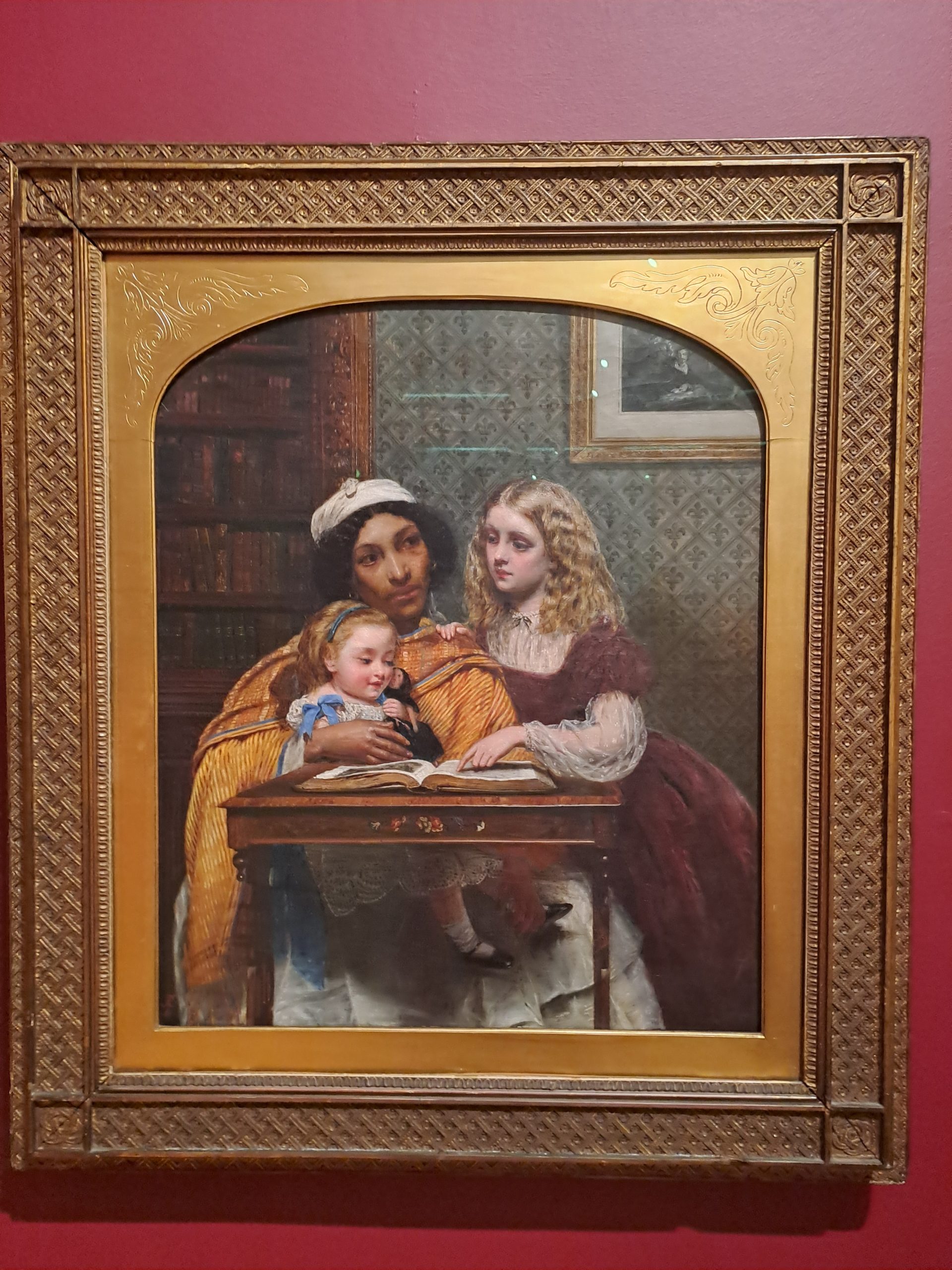
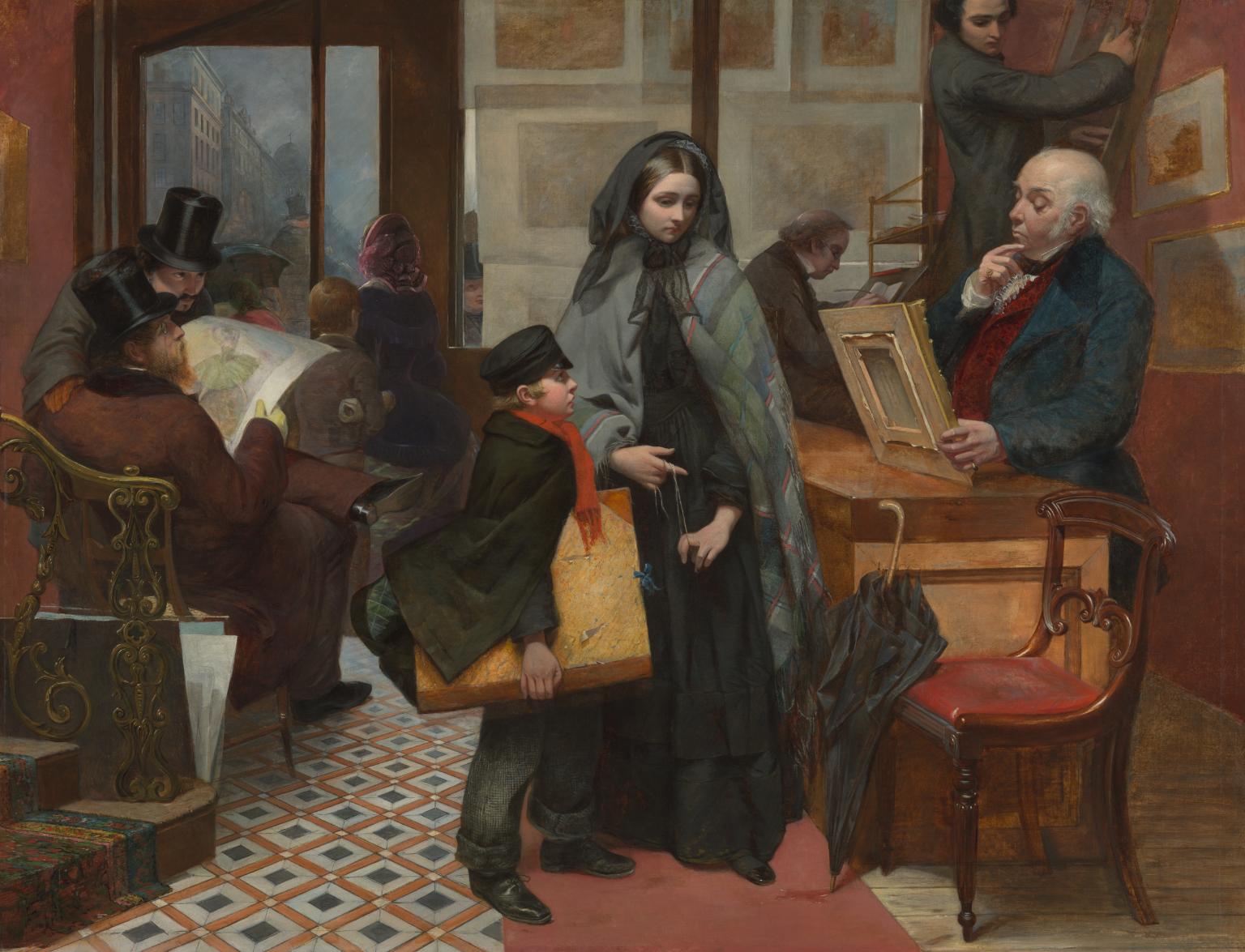
Emily Mary Osborn (1828 – 1925) was a member of the Society of Female Artists, an organisation founded in the mid-1850s with the aim of helping women artists to exhibit and sell their work. She was a signatory to a petition presented to the Royal Academy of Arts in 1859 that argued for women to be allowed to attend the Royal Academy’s schools. She was highly successful; her paintings sold, and they sold for good prices.
By the time we reach the exhibits from the 20th century, many battles had been won, and the artists featured are more familiar. Equally, there are many instances of women artists working in the last century who were overlooked in favour of their brothers or husbands. The exhibition is on until October 13th; catch it if you can.
Thanks for another excellent blog celebrating a fascinating exhibition.
It really is a great exhibition!
Dame B