
Stop the Pushback on Women’s Rights
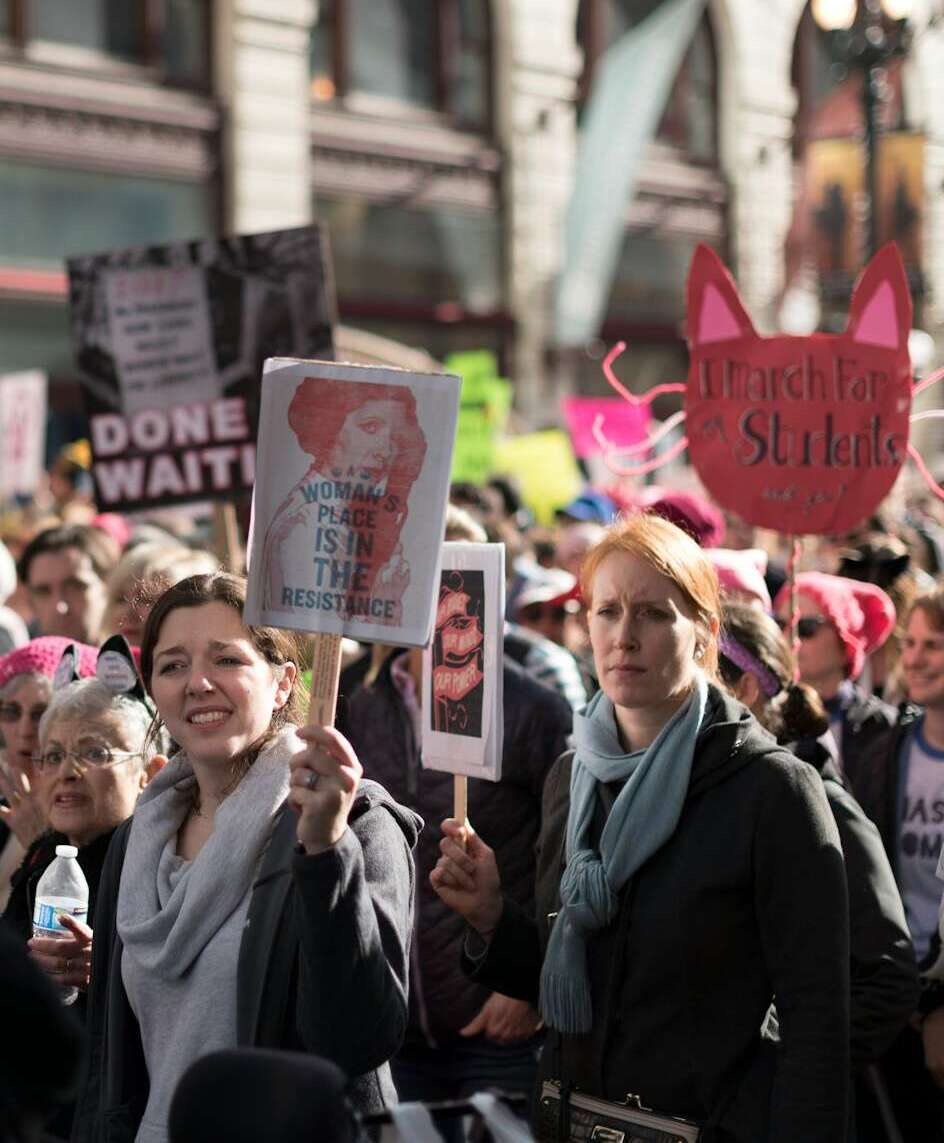
In truth the tide started turning against women’s rights a long time ago: we had Susan Faludi presenting us with the evidence in Backlash, published in 1991. Natasha Walters’s Living Dolls (2010) and Laura Bates’s Men Who Hate Women (2020), provided us with further proof.
So, while it’s welcome, the Stop the Pushback movement launched at the Geneva Graduate Institute at a meeting on 30 January feels long overdue.
After opening remarks from the chair of the meeting, Clare Somerville of the Geneva Graduate Institute of International and Development Studies, highlighting the degree to which Trump had accelerated the pushback in his first ten days in office, the moderator Nicoletta Dentico, Director of the Global Health Justice Program at the Society for International Development, set the scene (look away now if you don’t want to be thoroughly depressed):
- One in three women will be subject to violence in their lifetime
- The President of Argentina wants to remove femicide as a specific offence from the statute book
- Iran is introducing legislation to enable children to marry…
- … and much more.
The first speaker was Sarah Ibrahim Abdegalil, doctor and democracy advocate for the Sudanese diaspora. In 2019/19 Sudanese women had been at the forefront of the drive for peace, but had been overlooked in the subsequent peace process. They stepped up again when war re-erupted, only to find themselves facing the worst gender-based violence in the world: hundreds committed suicide after being subjected to rape, and female doctors were threatened for treating the wounded on both sides. There has been a resurgence in female genital mutilation, child marriage and sex slavery, and even in the UK women protesting outside Chatham House have faced violence. Abdegalil called for women to stand together, since the UN cannot protect them, amid fears that violence against women is being normalised.
Iranian pharmacist Parisa Nazari urged the UN to breaks its silence on Iran, where one man’s legal testimony is worth two women’s, and men can secure an instant divorce and will be invariably granted custody of any children. Despite this, Iran has produced two female Nobel peace laureates, campaigners gathered over one million signatures on a protest petition in 2008, and the recent ‘No to Executions’ movement enjoys widespread support from men. Nazari called the gender apartheid supported by her government a crime against humanity.
Ruchi Shroff, director of Navdanya International (a grassroots movement for biological and cultural diversity), drew attention to the degree to which caste exacerbated the problem in India. The media may be celebrating a green revolution brought about by GMOs, but these are leading to depletion of soils and the collapse of the water table. In the face of agrarian distress – debt burden, suicides, food insecurity – women are fighting back. Family groups led by women are creating community seed banks, regenerating the soil and powering a new economy. Yet their approach continues to be ignored by those who did the damage in the first place and are now trying to sell India quick-fix solutions – such as supplanting school kitchens with the distribution of pre-packaged processed foods. Her message? Real change cannot come from ‘one-way extractivism’.
Bettina Borisch, director of the World Federation of Public Health Associations, noted that when women took part in peace negotiations, the resulting treaties lasted longer – yet only one in seven negotiations include women. Greater female involvement of women in all spheres could further the fulfilment of the UN’s seventeen Sustainable Development Goals (SDGs). There is, for example, a lack of research into women’s health despite the extent of women’s involvement in health care at the grassroots level. Simply focusing on SDG 5, Gender Equality, would ensure progress in twelve of the other SDGs.
Ruben Bruwer, human rights officer at UNHCR, specialising in women’s rights, came across as something of a thorn in the side of his organisation. He bore witness to how anti-equality figures across the world have exploited prevailing anxieties and banded together, despite their differences, to resist progress and normalise misogyny, harnessing social media, infiltrating politics, opting out of international groups, defunding programmes and sowing discord in activist groups. They use specious parallels between nation and family to justify this and promote programmes led by men – any divergence from this is treachery.
Bruwer called for the UN to set out a vision of hope: to be bold and celebrate its successes, to take an intersectional approach, and co-opt men and boys onto its campaigns.
Dentico reinforced the need for governments and society to be aware of the UN’s contribution, since some countries think we can do without it.
Rafael Carrano Lelis, PHD student at the Geneva Graduate Institute, called for more solidarity between women’s groups and the LGBTQ+ community, maintaining that moves against trans women affect women’s rights more widely. He saw a retrogressive pushback against the very concept of gender itself. Between them, the Holy See and Trump promise deepening oppression.
Ashka Naik, Chief Research and Policy Officer at Corporate Accountability (an international human rights organisation), had taken the radical step of asking her children what she should cover in her presentation. Her young son said ‘Tell them some people are so arrogant they think girls are not their equal.’ (Naik’s own family is evidence of this – female foeticide and marital rape have been depressing occurrences in its past.) Her daughter, who is older, simply said ‘Fix it.’
Naik lamented the fact that women under 35 in the US are less likely to have access to education, a decent job and health care than their mothers were. Yet women’s efforts have lifted 150,000 people out of hunger. Half the world’s food producers are women: think what they could achieve with commensurate resources. Naik said it was time to supplant a perception of women’s victimhood with one of victorhood, given what women are capable of.
Dentico summed up, urging us to listen, learn and promote the movement. Its statement has been translated into 28 languages, with more to come, and a video of 18 women from all over the world screened widely. She called for the UN to develop a common strategy for tackling the backlash over the next six months – 2025 is the year we fight back.
If you’re interested in finding out more and lending your support, here is the link to Stop the Pushback
Signed!
Bravo!
I’m afraid I didn’t look away, Verity. The facts are stark and frightening.
2025 must be the year to fight back.
Thank you for sharing this.
Let’s hope the influence of this movement grows!