
Indian goddesses
No, this is not a blog about Bollywood stars, or the amazing work women are doing in rural areas of India to support women who are divorced or separated. Both of these are legitimate topics of conversation, but I am going back to the roots of Indian religions where the female goddess holds great power.
My source is the current exhibition at the British Museum: Ancient India living traditions, which runs until October 19th. It explores the origins of Hindu, Jain and Buddhist sacred art in the ancient and powerful nature spirits of India, and the spread of this art beyond the subcontinent. It looks at the early devotional art of India from a multi-faith, contemporary and global perspective, and highlights the inspiration behind now-familiar depictions of the deities and enlightened teachers of these world religions.
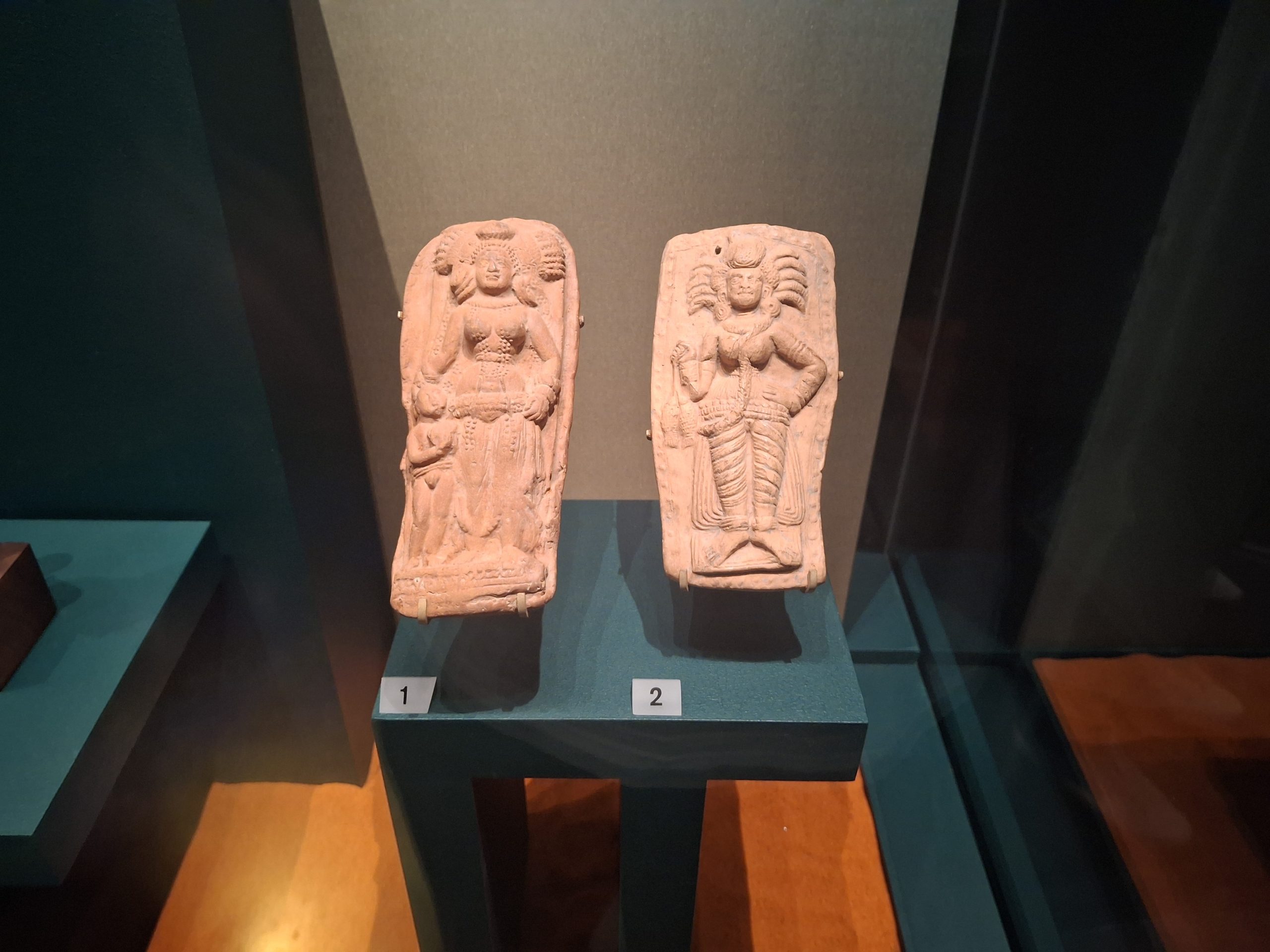
I have had the fortune to visit and stay in India on many occasions, but wanted to learn more about the female deities and forces that shaped these religions. Meet Yakshis: they are female nature spirits able to bestow abundance and fertility as well as death and disease. They are always depicted as full-figured, extravagantly bejewelled women standing and looking directly at the viewer. The earliest representations were made of terracotta – they were in effect mass produced, hundreds at a time. Some yakshis have hair decorated with sprays of weapons, such as elephant prods, spears, axes and tridents, suggesting a powerful warrior-like personality. Others hold lotus flowers which link to fertility.
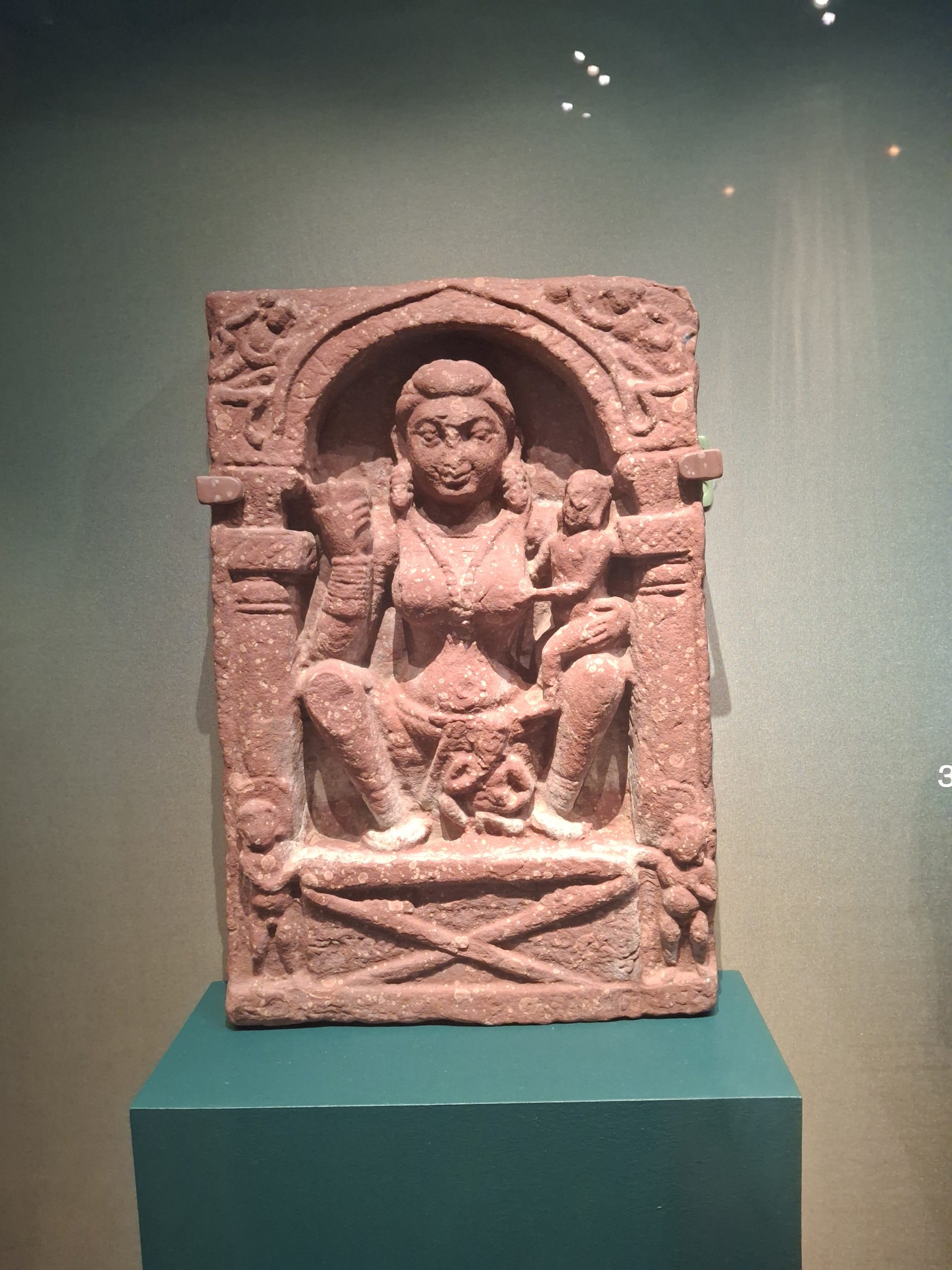
Sometimes yakshis are depicted on terracotta plaques; although the names of these deities are mostly unknown today, the sheer number of plaques discovered shows that their worship was central to the daily lives of people in India. Later, some yakshis became prominent, popular goddesses. According to Buddhist tradition, Hariti was associated with smallpox, and the stealing and killing of children to feed her large family. To show her how much these parents were suffering, the Buddha briefly hid one of Hariti’s children beneath his rice bowl. She was so distraught that from that moment she vowed to protect all children and women in childbirth.
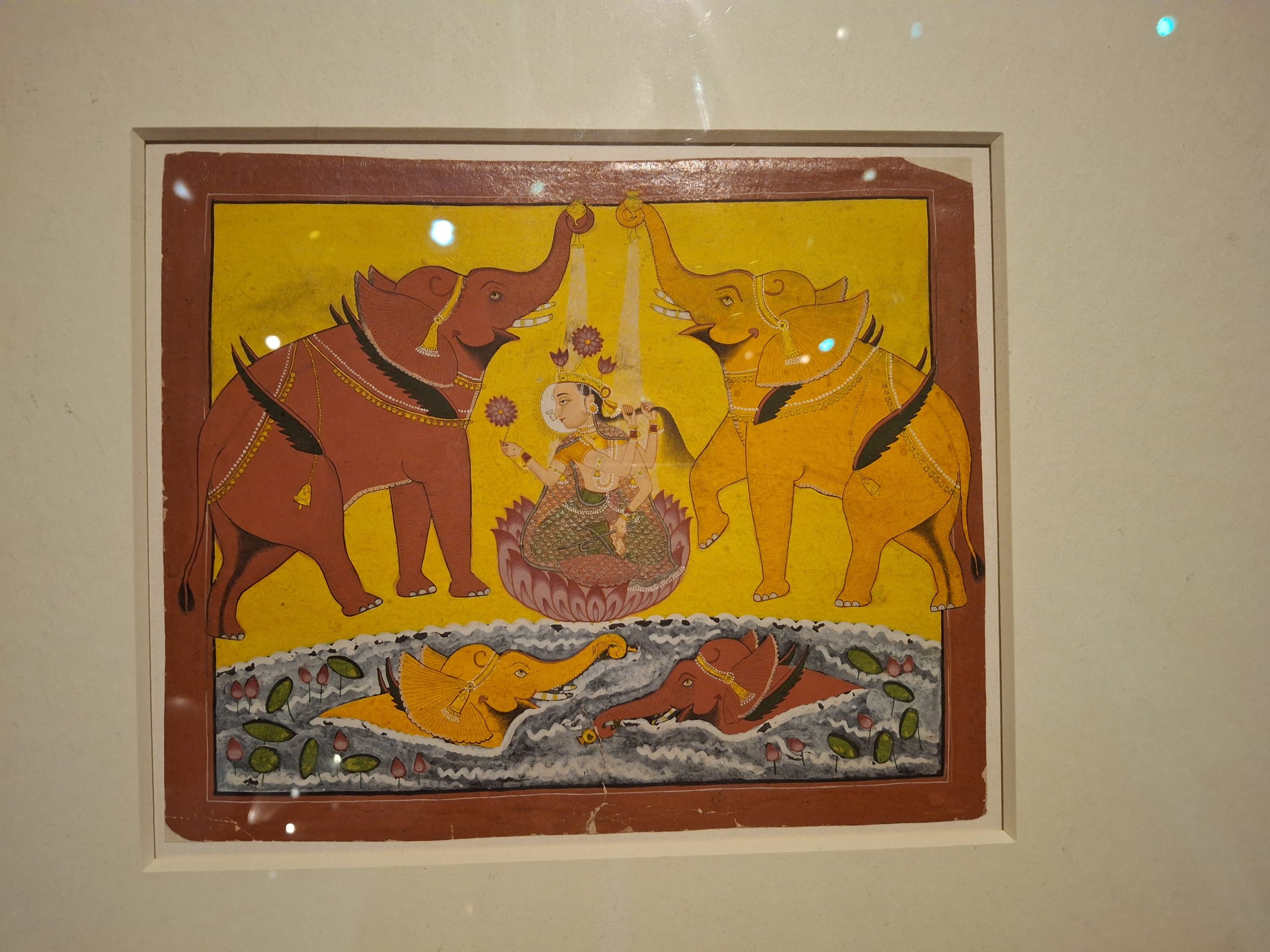
The goddess Lakshmi has yakshi origins and is one of the most popular deities in Hinduism, Buddhism and Jainism. There is a beautiful painting of her in the exhibition where she sits on a lotus blossom while elephants pour water over her. Their dark bodies symbolise monsoon clouds filled with rain, ready to bring the earth to life. Lakshmi is the goddess of good fortune and abundance, and this image successfully conveys that message.
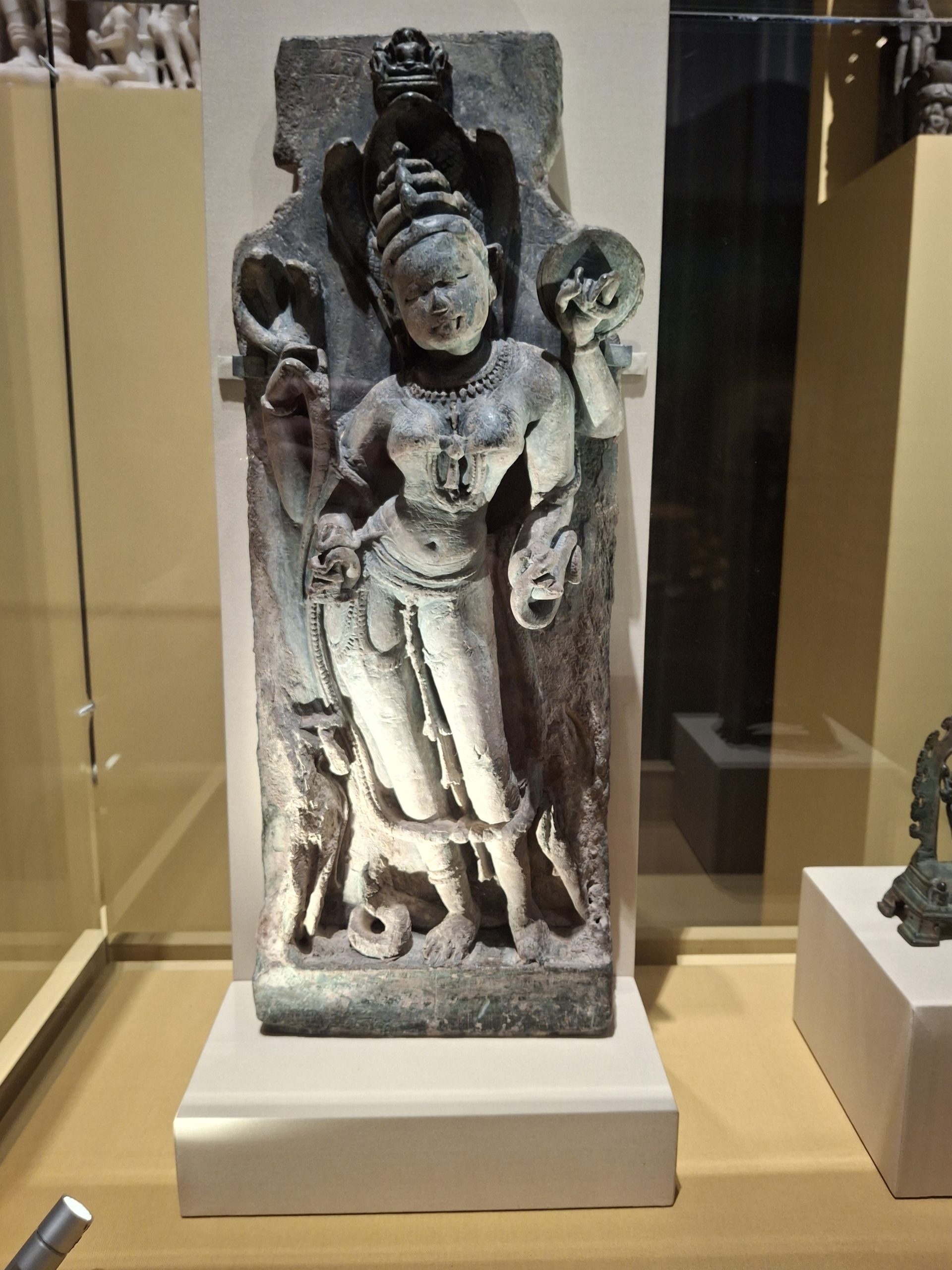
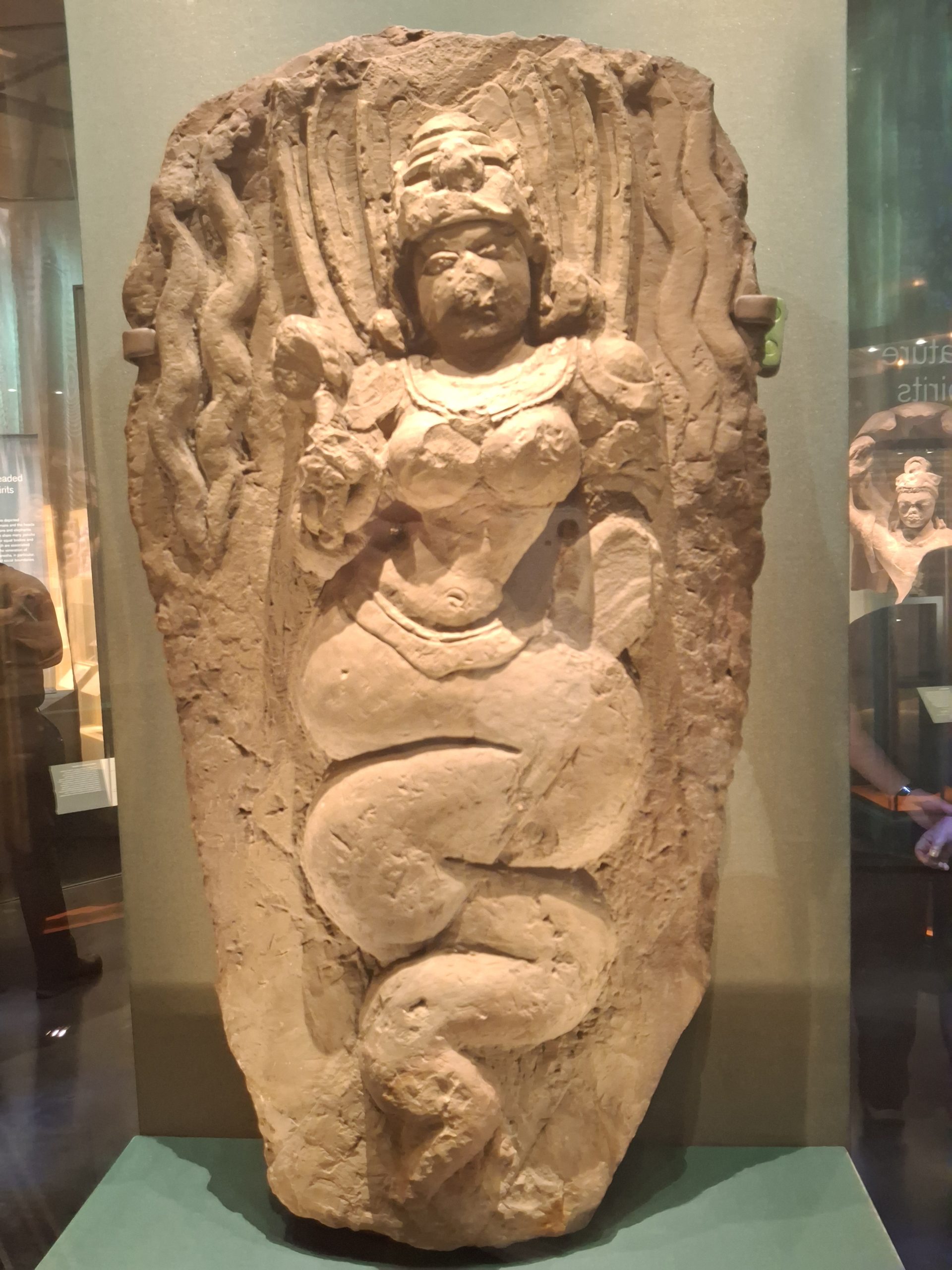
Nagas are a member of a class of mythical semidivine beings, half human and half serpent, and naginis are female sacred serpents. Whenever divine snakes adopt a human form they keep some snake related features. Manasa is a snake goddess venerated by Buddhists and Hindus alike for her ability to provide prosperity, children and protection from snakes. She is usually depicted holding a serpent or a child.
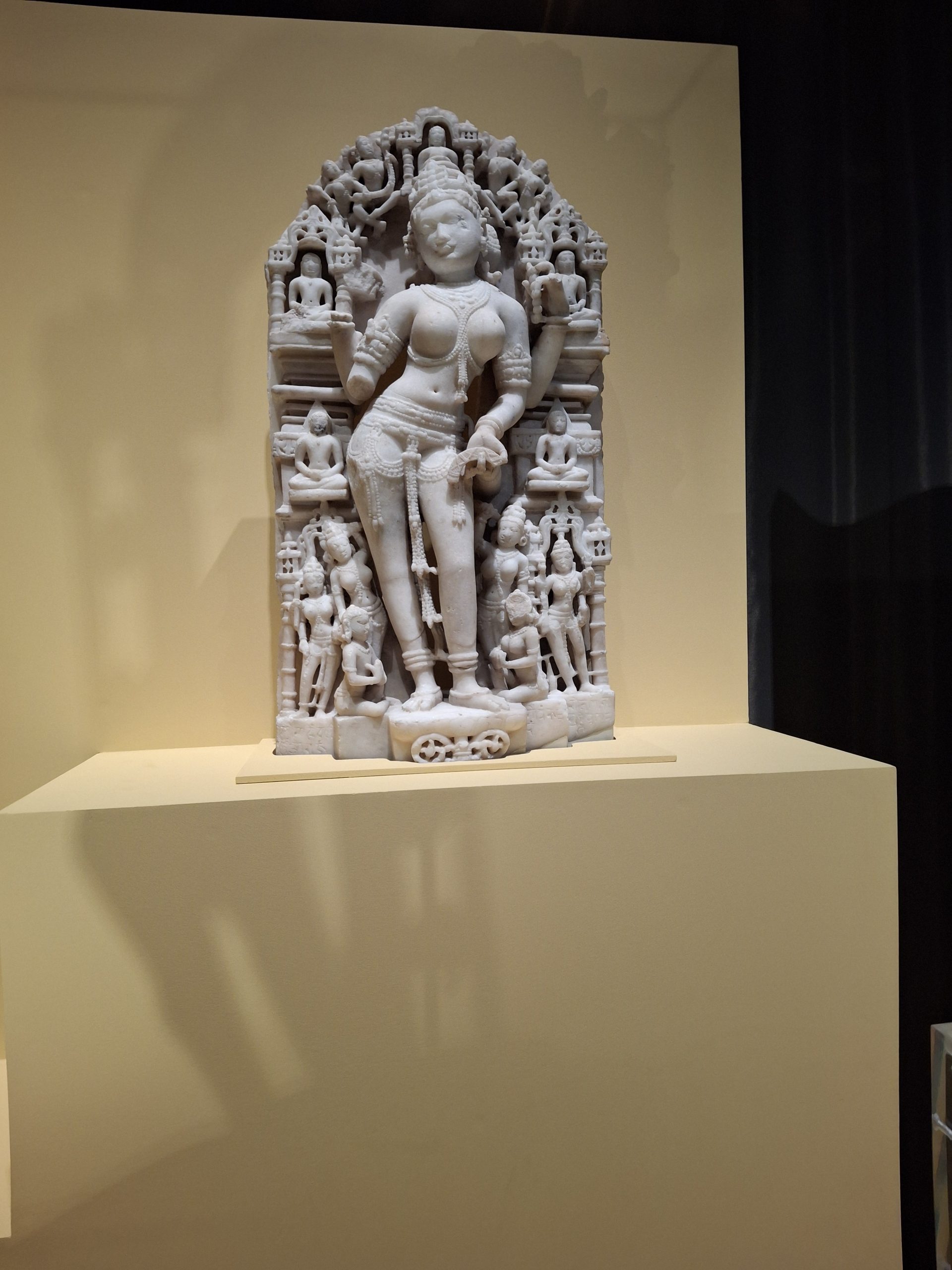
For Jain devotees the ultimate goal is to gain enlightenment; to help them there are sixteen goddesses of knowledge called Vidyadevis, usually depicted holding a manuscript and sometimes a pen. Sarasvati is worshipped by Jains and Hindus as the personification and guardian of all knowledge and is also the guardian of the arts and music.
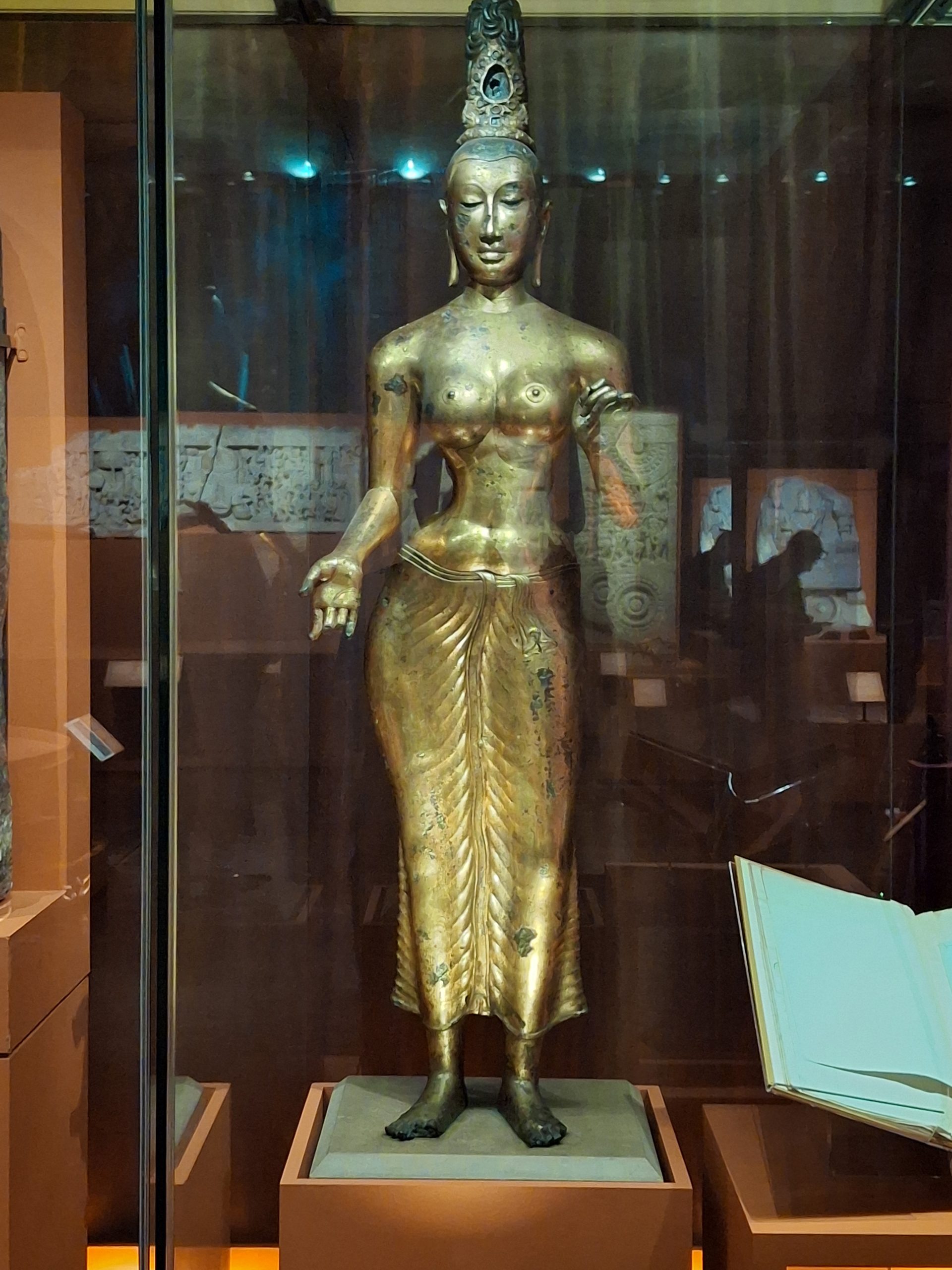
In different Buddhist traditions, Tara is venerated as goddess of compassion, protecting travellers and navigators, with her right hand extended in the gesture of giving.
This exhibition was for me a personal journey of discovery into female representations of deities in three major religions of India, although there are many male images too. This is a tiny snapshot of a wealth of images and information on display. Catch it if you can.
Amazing. Certainly a wealth of images. There’s so much to wonder at here and I think your affinity with India enhances the piece, Barbara.
I’d love to see the exhibition celebrated up here in the north-west.
Thanks for the link. Instant access!
So glad the access worked!
Dame B