
It is a far, far better thing that I do…
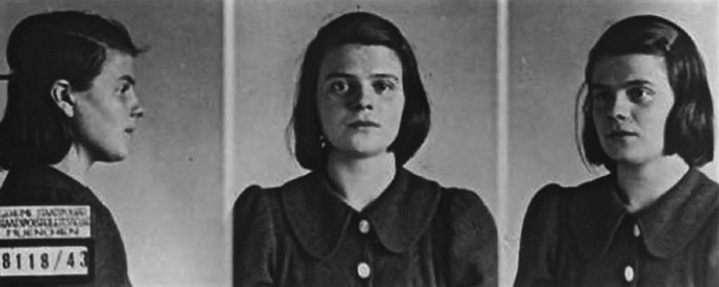
‘Such a fine, sunny day, and I have to go… What does my death matter, if through us, thousands of people are awakened and stirred to action?’
Those were the last words of Sophie Scholl, a German born on May 9, 1921. Her father was the mayor of the south-western town of Forchtenberg. Sophie, along with her five brothers and sisters, was brought up in a Lutheran household in which Christian values mattered.
By the time Sophie reached her teens, Hitler was in charge of Germany At first, Sophie and her brother Hans supported the National Socialist Party. Hans joined the Hitler Youth and Sophie joined the sister organisation, the League of German Girls. Their father and colleagues were wholly opposed to the politics of the Third Reich, and as the siblings saw how Jewish acquaintances and artists were treated, they began to view the regime through increasingly critical eyes.
After Hitler’s invasion of Poland, Sophie and Hans’s views hardened further. They were both studying at Munich university, and some of their friends had seen active service in the army. A small group of them decided to form the ‘White Rose’, a passive resistance organisation. There were just six members: brother Hans and his friend Alexander Schmorell, who were joined by Sophie, Christoph Probst and Willi Graf, and by one of their professors, Kurt Huber.
Supported by a network of friends and supporters, they printed and distributed leaflets, encouraging citizens to resist the Nazi regime, denouncing the murder of Jewish people and demanding an end to the war. They cited ethical and philosophical arguments against Nazi policies. One pamphlet read: ‘We won’t be silenced. We are your bad conscience; the White Rose won’t leave you in peace.’
The group produced their sixth pamphlet at the beginning of 1943. It read: ‘The German name is forever damaged if the German youth doesn’t finally rise up, avenge and atone at the same time, crush their tormentors and found a new spiritual Europe.’ This was to be their last pamphlet. On 18 February 1943 Hans and Sophie were handing out the leaflets at the university. Sophie climbed to the top-floor landing that overlooked the atrium of the university’s main building and flung a stack of pamphlets over the balustrade. She was watched by a caretaker who betrayed her to the Gestapo. Sophie and Hans were interrogated and, after a show trial, sentenced to death and executed on February 22, 1943. They had refused to betray the rest of the group, but the authorities tracked them down. Within a few months the friends had all been executed by guillotine.
After her death, copies of the final White Rose leaflet were air-dropped over Germany by the Allies. In the decades following her death, numerous schools, streets, and memorials have been named in her and her brother’s honour for their role.
At a time when antisemitism is rearing its ugly head yet again and attacks on Jews and their places of worship are taking place, the courage of a young woman like Sophie Scholl in speaking out against the actions of her fellow citizens can give both hope and succour. Time proved her right.
What an inspiring story and one that I’m ashamed to say I didn’t know.
I’m heartened by the fact her name lives on in memorials and her message should give hope in these troubled times.
Thank you Barbara.
I found a mention to her quite by chance! What strength of character!
Dame B