
From Wales to Argentina
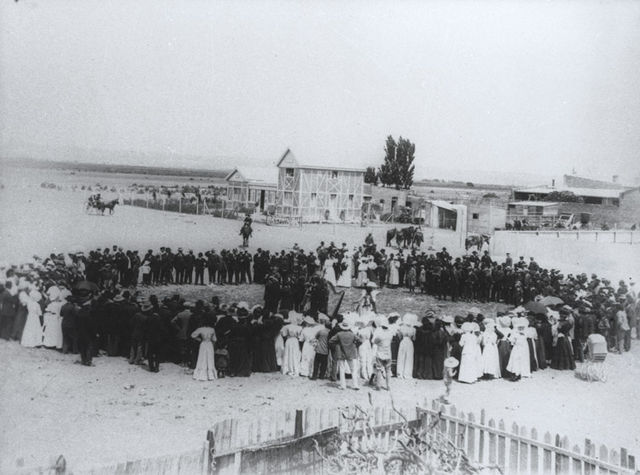
I feel it is time to pick up the gauntlet casually tossed down by Joyce in a recent comment to one of our blogs. It concerns the migration of Welsh people to Patagonia, an area which I have been fortunate enough to visit.
It all began in the early 1800s, when rural communities began to be under threat in Wales as the Industrial Revolution encouraged the production of coal, slate, iron and steel in the country. In parts of Wales there was a feeling that their cultural identity was being absorbed into Britain, and that it was worth exploring other parts of the world where a distinctly Welsh identity could be maintained.
Michael Jones was a principal of Bala College in North Wales and had been corresponding with the Argentinian government about the possibility of a group of Welsh people moving to an area called Bahia Blanca, where they would be allowed to keep their language and traditions. This arrangement was politically expedient for the government as Chile disputed its claim to this land.
Around 150 men, women and children sailed from Liverpool in May 1865. Eight weeks later they arrived at what is now known as Puerto Madryn in Patagonia. The landscape and environment was not the one they had been promised; it consisted of a windswept pampas with no water or forests to provide wood for shelter. The settlers persevered and founded a colony in the Chubut valley by a river they named Camwy. Life was tough and it was hard to make a living from the land.
We now meet the heroine of the piece – the woman whose idea transformed the fortune of these struggling immigrants. Historians note that Rachel Jenkins helped change the history of the colony and secured its future. She saw that on occasions the River Camwy burst its banks and the ensuing flooding brought life to the land surrounding the river. A programme of irrigation and water management was developed that helped save the Chubut valley and its new settlers.
New settlers arrived from Wales and by 1874 the total Welsh immigrant population was over 270 – still a tiny number. New irrigation channels were dug alongside the Chubut valley and farms began to spring up.
In 1875 the Argentine government granted the Welsh settlers official title to the land, encouraging more Welsh people to emigrate, including many from the South Wales coalfields, where there was a major depression. Waves of migration continued until the beginning of the 20th century, and the region became a highly productive and fertile region of Argentina. Their successes included the discovery of gold in the foothills of the Andes, where the landscape and terrain were similar to that of Wales.
Things changed fundamentally in 1896 when legislation was introduced to ensure that Spanish was the language used in education across all national primary schools in Argentina, something the settlers could not oppose, although in 1902 The Camwy Intermediate Education Society was formed with the aim of establishing an intermediate school, where children over the age of 14 could receive their education in Welsh. In 1904, the Welsh settlers were able to vote for the whole area to come under the flag of either Argentina or Chile, as this was still under dispute. Unsurprisingly, the Welsh community chose Argentina.
Over the 20th century the number of Welsh settlers declined; nevertheless in 1965, the centenary of the first settlers’ arrival, there was a concerted effort to revive the history of the Welsh presence in Patagonia. With the aid of the British Council, the National Assembly of Wales sponsors a scheme to support Welsh language and culture in Patagonia, where Welsh teachers are sent from Wales to Patagonia to teach Welsh.
Visitors to the area can still see road signs in both Spanish and Welsh, and the area has many tea rooms similar to those often found in small Welsh villages.
Lucky Barbara to have the opportunity to visit such a fascinating place.
Tonight, BBC 4 – March 1st – 9pm there’s a repeat of PATAGONIA WITH HUW EDWARDS . Well worth a watch.
Happy St David’s Day!
Thanks Joyce. I will definitely watch that on Iplayer!
Dame B