
50:50
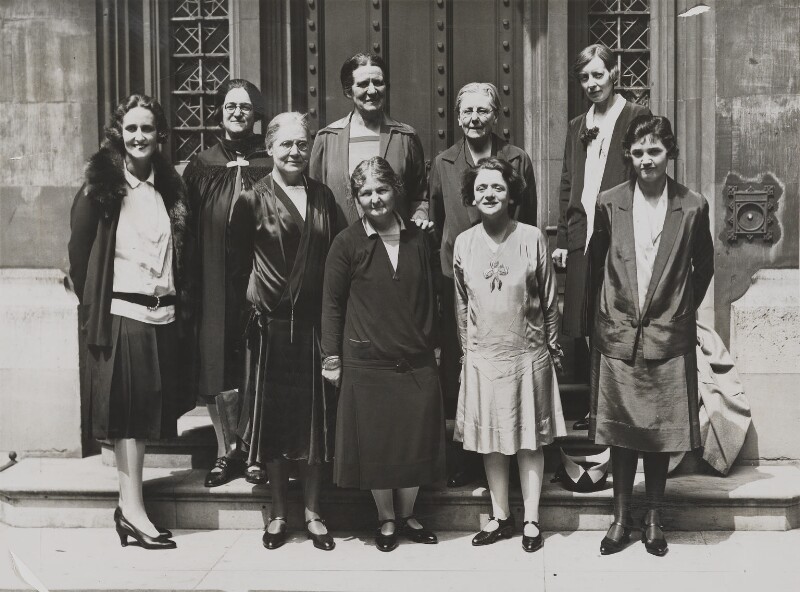
Do you know the current percentage of female MPs in the House of Commons? Read on and all will be revealed.
Female representation in governments across the world varies hugely, and actually, as of February 2024, only six Parliaments in the world have gender parity in their lower house.
Before going further, try making a list of which countries I’m talking about that do have an equal balance of males and females in their parliament. No peeping, grab a bit of paper and have a guess. Now read on… The countries are Mexico, Nicaragua, Cuba, Rwanda, Andorra and the United Arab Emirates. Surprised? So was I. There is definitely a steady increase: in 1995 women made up only 11.3% of parliamentarians, whereas by the end of 2022 it was 26.5%.
However, if this rate continues, it will take over 80 years for gender parity to be realised globally. So how can this be speeded up? One way is for quotas to be applied. In 2022 there were 18 countries which had a change in parliament where legislated gender quotas were in place in the single or lower house. In these countries 30.3% of the total number of MPs are women. In comparison, in countries with no gender quotas – 19 apparently – that had a parliamentary renewal i.e. a change in parliament, only 22.2% of parliamentarians elected were women.
There are many other factors affecting how women achieve a higher representation in parliaments. Apparently, on average, countries with proportional or mixed voting systems have a higher number of women parliamentarians (29%) than countries that use a plurality or majoritarian voting system (22%).
The type of voting system also influences how quotas can be implemented: a PR voting system is more conductive to implementing legislative quotas, because it allows for smaller parties to campaign on this issue. This is because there is likely to be a more diverse mix of candidates who may well wish to push for quotas than standard mainstream parties do.
Quotas can be applied in a number of ways: some countries have ‘reserved seats’ set aside for women that men are unable to contest. However, the actual number of such seats is usually relatively low, which means that significant changes in gender balance are not achieved.
Our first past the post system in the UK is of course not based on proportional representation, and women currently make up only 35% of elected MPs in the House of Commons. The UK is therefore doing better than some countries, but still has some way to go. The Tony Blair government that was elected in 1997 heralded a huge leap forward; 101 women Labour MPs were elected. This was a result of consistent campaigning, and a series of successful steps.
The first was for a woman to be on every shortlist where a Labour MP was retiring. Although the rule change was made, men still got selected to replace male Labour MPs. The next step was to push for half of those on shortlists to be women. It was controversial, and, again, failed to get women selected. So campaigners pushed for half the seats where men were retiring and half the seats Labour hoped to win to be reserved for women. This was criticised as discriminatory. But it paved the way for there to be Labour women candidates in every region of England, Scotland and Wales who then went on to win in 1997.
An election looms. Let’s hope the next Parliament has a 50:50 gender parity.
An interesting article Barbara!
I did try to guess the countries that have equal balance of males/females in their parliaments and failed miserably. I too was surprised at the reality.
Although there is a steady increase in gender parity , the fact that it would take over 80 years at this rate to achieve this globally is sobering. 50 50 in the next Parliament? We can but hope.
Thanks – I think we are all surprised at the countries leading the way!
Dame B