
Painting Light
Anna Ancher, Dulwich Picture Gallery, till 8 March 2026
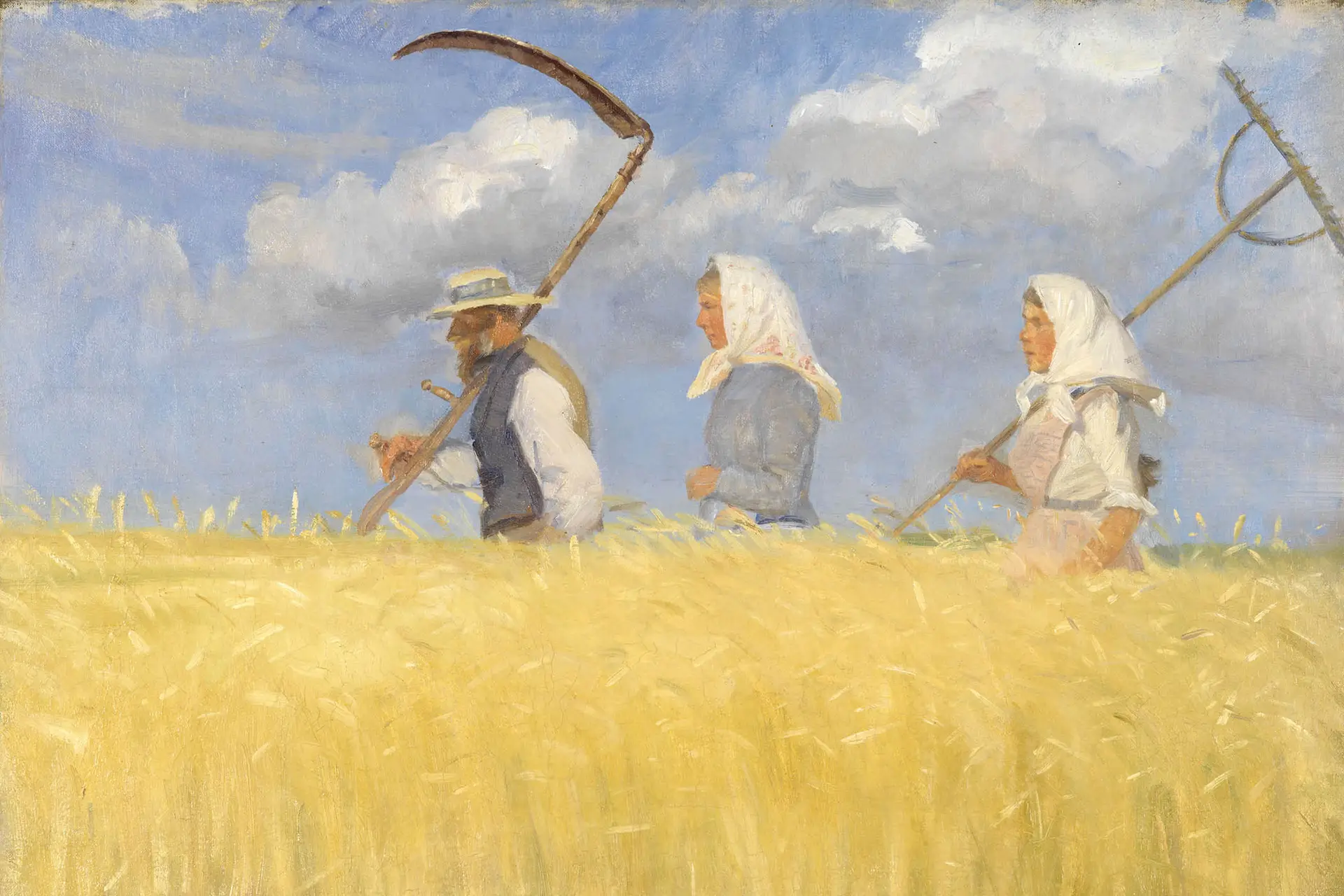
Painting Light is prescribed viewing for these dark January days. Anna Ancher (1859–1935) was at the heart of Denmark’s Skagen artistic movement of new realism and influenced by the Impressionists, but she developed a technique and a perception all her own to produce striking and resonant work.
It is first and foremost her handling of light that sets her apart from her peers. Living in the far north of Denmark, at the tip of Jutland, she captured the effects of the low sun in countless different ways.
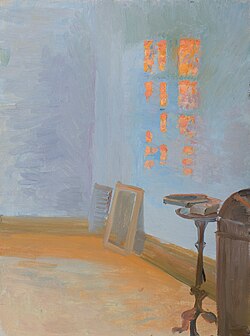
In paintings such as Sunlight in the Blue Room and the view of an empty interior with a blazing sunset reflected on the wall (discovered unframed in her studio after her death), her handling of the glow is counterintuitive – not a transparent wash, but thickly crusted brushstrokes of brilliant orange, alive with the impermanence of natural phenomena.
In Two Girls, Sewing Lessons, the light through the window is softened, with a tall plant casting dappled shadows on the wall behind, to which the figures, intent on their task, are indifferent.
Many of her works represent interiors, which was considered the proper subject for women’s art at the time, but her outdoor scenes are no less compelling. Harvesters is a personal favourite. On the face of it, it is a painting of three agricultural workers walking through a wheatfield. But it is so much more than that: the slightly low angle from which they are portrayed gives them stature, the silhouettes of their implements against the sky become mysterious runic shapes, and the shimmer of wheat ears dancing across the horizon conspire to give it a ceremonial dimension.
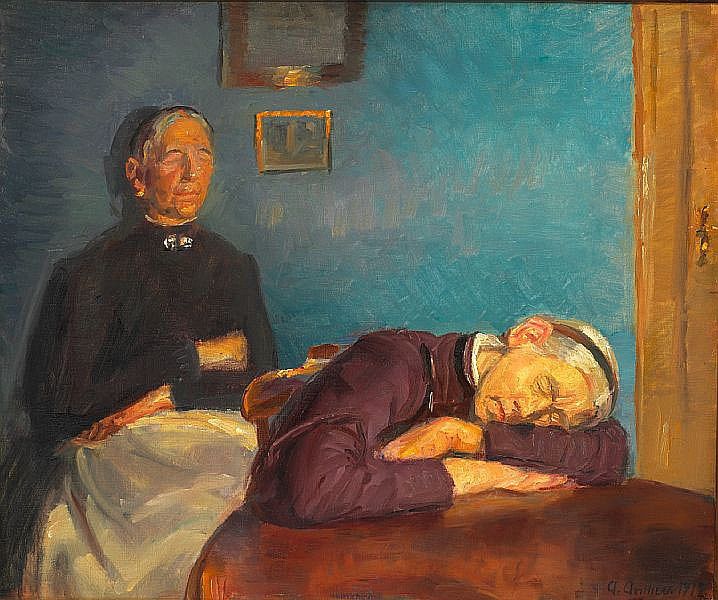
Ancher’s output is highly individual, yet varied. Portraits, interiors, landscapes – she can strike at your heart in any of these categories. The portraits of her mother combine a clear-eyed depiction of her age and frailty with love and compassion, imbuing the sitter with a vibrant dignity through the use of rich colour. I love her portrait of her two sisters resting after a shift working in the family hotel: one asleep at a table with her head on her folded arms, the other sitting in an upright chair against the wall, eyes closed – not asleep, you suspect, just quietly relishing the cessation of toil and the sensation of stillness.
Another reason to enjoy this exhibition is that Ancher’s story subverts the traditional narrative. Though we may not have heard of her in this country (and I certainly hadn’t), she is well-known in Denmark and her talent was recognised during her lifetime. She made some study strips to other European countries, but for the most part lived and worked in Skagen, where she was born, and had the full support of her family and her husband, Michael Ancher, also a painter. Belonging to the town’s close-knit community gave her access to all its inhabitants, who welcomed her into their homes and sat for her.
Though her mother belonged to a conservative Christian sect she encouraged Ancher in her artistic ambitions – which is more than can be said for Vilhelm Kyhn, her art teacher in Copenhagen, who, on hearing that Ancher was expecting a baby, advised her to load all her art materials into a wheelbarrow and tip them into the sea, as her priority should now be the child.
Thankfully she ignored him, and we now have this enthralling exhibition to warm our hearts at.
NB: If you should visit the exhibition, please make a point of looking at the two flower paintings immediately to your right on leaving the last room. They are by 18th century Dutch painter Francina van Huysum – but her first name has been clumsily scratched out and replaced with the first name of her more famous father Jan (van Huysum) …
Comment *Thank you for introducing me to this fabulous painter they are wonderful. Harvesters is just delightful.
Dulwich Picture Gallery does it again!
I agree! I hadn’t heard of this artist but I love the examples you give, especially Harvesters.
Sorry I missed this! I think I’ll have been three times by the time the exhibition finishes