
Lolly Willowes
Sylvia Townsend Warner, Penguin Modern Classics 2020
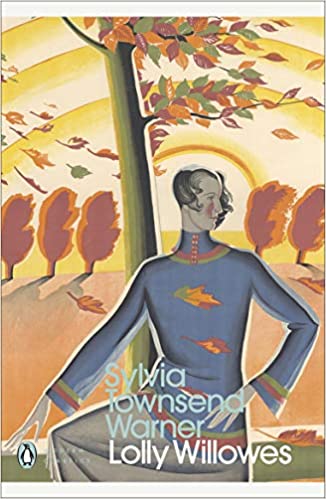
Helen McDonald, she of H is for Hawk fame, says of Lolly Willowes that it is ‘The book that I’ll be pressing into people’s hands forever…’, so I was going to have to read it sooner or later.
I was a huge fan of The Corner That Held Them, but Lolly Willowes is completely different – not a substantial novel of witty historical construction, but a slender flight of fantasy set firmly in its own time (it was first published in 1926).
In terms of fictional stock characters, Lolly (Laura) is the classic maiden aunt. Her many years of devoted service looking after her widowed father come to an abrupt end when he dies , and the incoming heir to the property, Lolly’s older brother, packs her off to London to live with her younger brother and his family.
This is not at all what Lolly wants, but the habit of obedience is too deeply ingrained in her to allow any protest. She accepts the general consensus that she will enjoy life in London far more than being stuck in the country. After all, ‘London life was very full and exciting. There were the shops, processions of the Royal Family and the unemployed…’
But Lolly is really a creature of woods and trees and rising sap, a gardener and a creator of strange herbal decoctions. When even the First World War fails to make any dent on the comfortable and complacent existence of her brother’s family, Lolly begins to feel restless – and to assuage her restlessness, she begins to walk, to explore far and wide in her city.
It’s on one of these walks that she discovers an Aladdin’s cave: a greengrocer’s in Moscow Road, Bayswater. She has an epiphany as she gazes at a collection of glowing bottled fruits: ‘She seemed to be standing alone in a darkening orchard, her feet in the grass, her arms stretched up to the pattern of leaves and fruit, her fingers seeking the rounded ovals of the fruit among the pointed ovals of the leaves.’
On learning that the source of the shop’s abundant produce and flowers is Buckinghamshire, she moves to the village of Great Mop, much to the consternation of her family, taking rooms at the house of a local woman.
And here the weirdness really begins, confirming my belief that the countryside (even the safe Home Counties countryside) is not a haven of healthy communion with nature, as some would have us believe, but a maelstrom of dark desires and unspoken mysteries – but, in this case, in a good way.
Revelling in the woods and wildness her daily walks take her into, Lolly is in her element. A savage little kitten adopts her, and her landlady proposes a late-night ramble, during which she realises that most of the village is about and about among the shadows. And who is the affable gamekeeper who provides such reassurance to her in the woods after she has passed a somewhat disturbing night?
By now Lolly has utterly subverted the expectations of dutiful spinsterhood she had submitted to for twenty years, and articulates this transformation in a long, impassioned statement about the need for the liberation of women that is the equal of anything written by Greer, Friedan or Figes: ‘It’s to escape all that – to have a life of one’s own, not an existence doled out to you by others, charitable refuse of their thoughts, so many ounces of stale bread of life a day…’
The book is a joy from the start to this magnificent concluding rallying cry (there’s lot’s more of it I won’t quote for spoiler reasons).
A great review Verity. I look forward to reading it.
Many thanks.
Thanks! I think I’ll read all the rest of her books, because they each have very different settings.