
The woman who caused Otto’s throne to totter
Travel broadens the mind – it had been so long that I had forgotten that important fact. Two weeks in Greece where we managed a near perfect blend of immersion in the ancient world with lazy swimming and reading have been highly restorative.
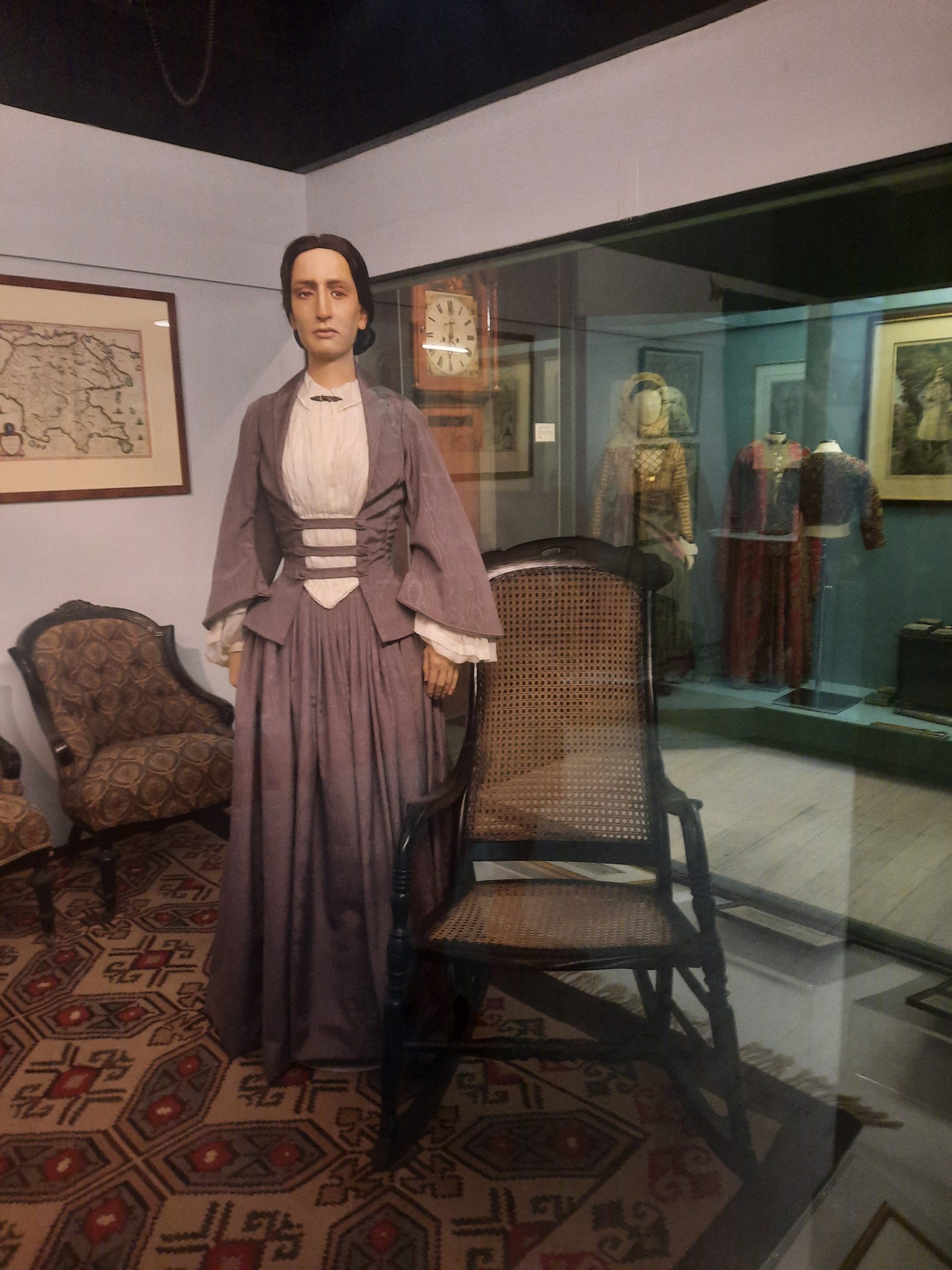
One of the towns we visited is Nafplion, a beautiful port on the mainland overlooked by a remarkable fortress on the cliffs above. The new archaeological museum was a joy to visit, but an unexpected bonus was the equally new Folklore Museum. Wandering slowly round, marvelling at some of the intricate embroidery in both women’s and men’s clothing, I came across a brand new (to me) Greek dame!
Kalliopi Papalexopolou was born in Patras in 1809. At the outbreak of the Greek war of independence in 1821 her father took Kalliopi, her mother and sisters to Italy – returning to Greece to fight for the liberation of his country. Some things never change…
In Italy Kalliopi, who had been well educated, became committed to democratic and humanitarian ideals. She returned to Greece in 1826, settled in Nafplion and married the town’s first mayor. She devoted her energies and money to the struggle for independence and charitable works, challenging the model of autocracy that prevailed.
Kalliopi’s house became a centre for the arts, literature and discussion of democratic ideas. The Greek war ended in 1829, and Greece was finally recognised as an independent state, with Prince Otto of Bavaria established as the new king. This was anathema to Kalliopi; she saw her ideals of democracy and equality sidelined. When she was widowed in 1862 she became the guiding force of the anti-Otto revolutionary movement, with Nafplion its epicentre. On February 1st 1862 she stood on the balcony of her house in Syntagma Square in Nafplion and addressed the crowd of civilians and soldiers, all united in their desire to make Otto rule constitutionally and eventually to remove him from the throne.
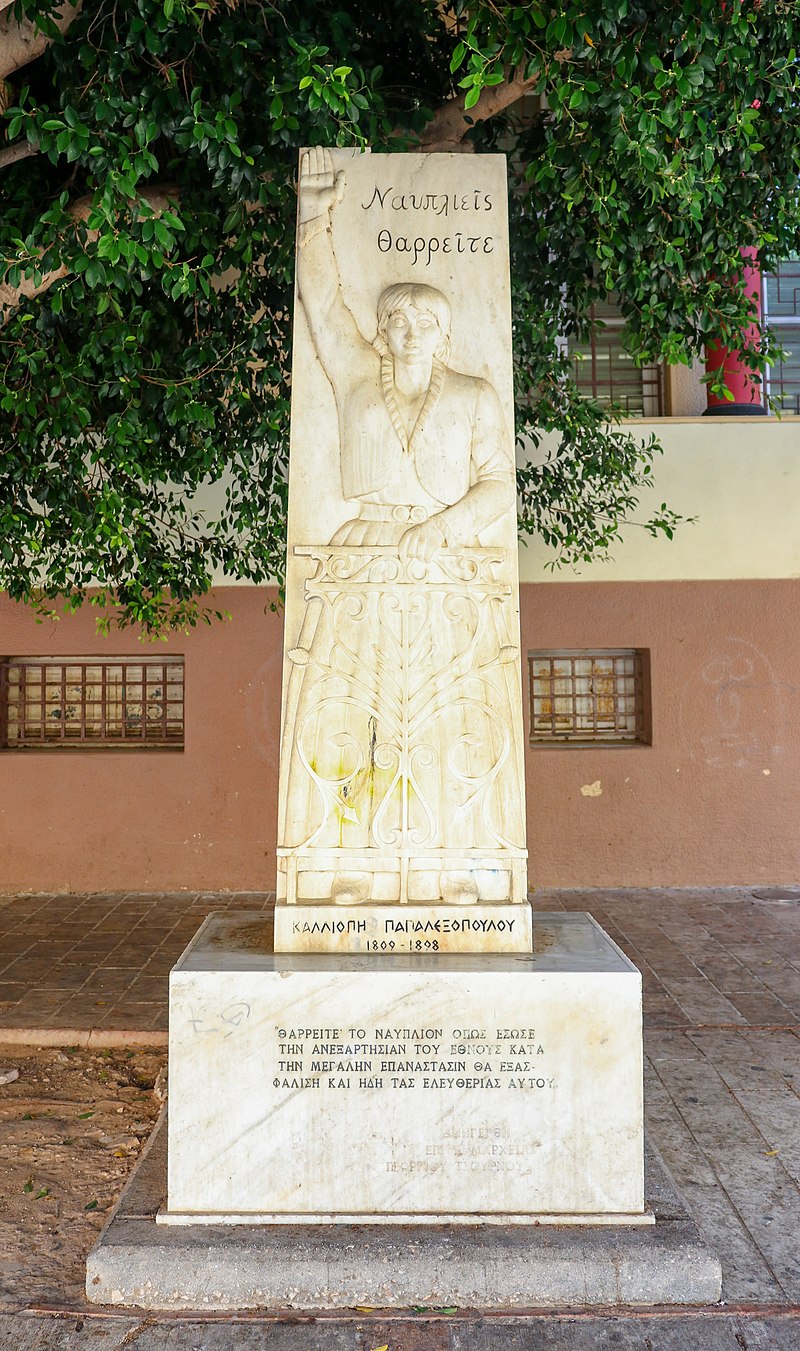
Otto sent all his available forces to Nafplion; after several battles the army laid siege to Nafplion, forcing its surrender. In April 1862 the troops entered the town and captured its fortifications. Nevertheless, the spirit of the country had changed. There was a national uprising and in October of that year Otto was forced to leave the country for good. A few days later the provisional government sent the warship Hellas to Nafplion to bring Kalliopi Papalexopolou to the capital. The people of Athens and Piraeus gave her a jubilant welcome. In recognition of her service to the country, the Greek state bestowed honours on ‘the woman who caused Otto’s throne to totter’.
The folklore museum in Nafplion has a life size model of Kalliopi in her home dressed in the clothing of the time. There is also a monument to her in Syntagma Square in Nafplion. There is an entry in Wikipedia about her in Greek only, so if there are any Greek-speaking damesnet readers out there who fancy doing a spot of translation, let us know and we can try and get an English version uploaded too.