
Gwen John: Art and Life in London and Paris
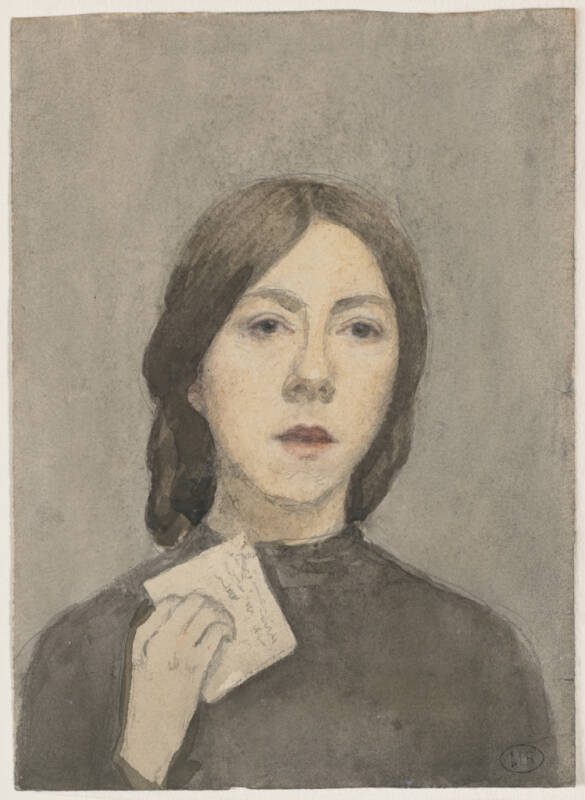
It is always a joy to visit Pallant House Gallery in Chichester. In my view their curated exhibitions of British art knock Tate Britain into touch. Their latest show, Gwen John: Art and Life in London and Paris, hits the spot once more.
Pallant House is a small gallery, of course, but by the time I had completed the exhibition tour I had developed an understanding of and affinity with this brilliant artist.
Gwen John was born in Wales in 1876, but most of her painting life was in France. Her mother Augusta was an amateur watercolourist and both parents encouraged the children’s interest in literature and art. Augusta died when John was 8 years old, and the family moved to Tenby. John painted seaside pictures of gulls, shells and fish, and in 1895 left home to study at the Slade School of Art, at the time one of the few art schools that were accepting women on the same terms as men. John lived with her younger brother Augustus, who had enrolled at the Slade a year earlier.
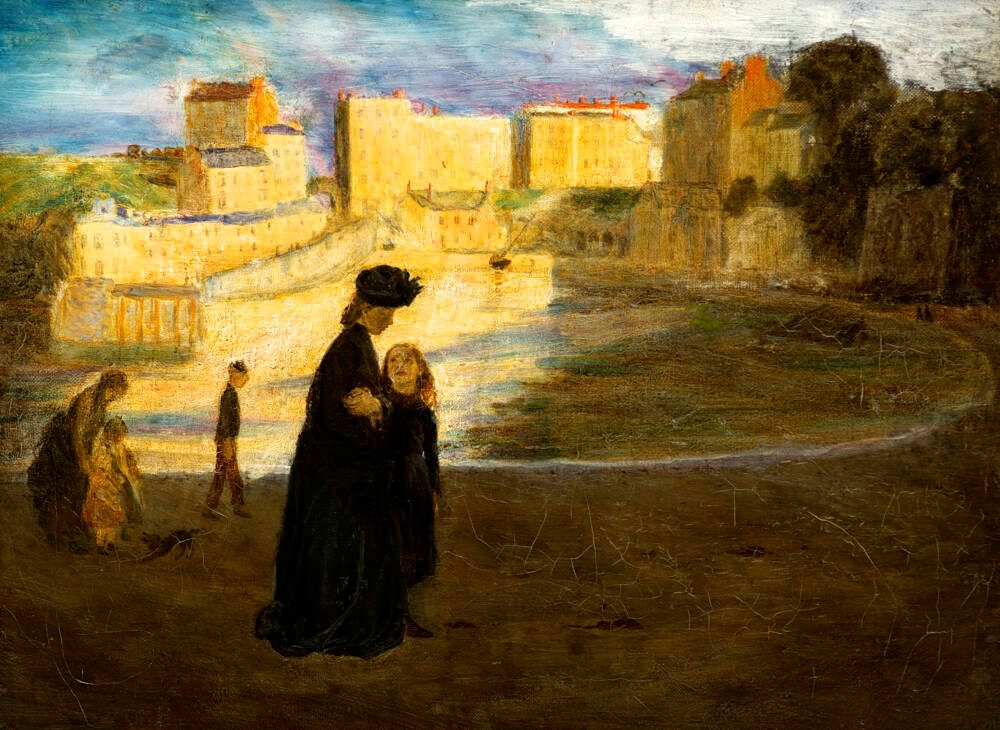
In 1898 John went to Paris and studied under James Abbott Whistler, returning to London a year later. Within a few years she was back in Paris, where she found work as an artist’s model, mostly for women artists. She was introduced to Auguste Rodin, and became his model and lover for the next ten years. She also had intimate relationships with women.
Although John mixed with the key artists living in Paris at that time, including Matisse, Picasso, Brancusi and poet Rainer Maria Rilke, she worked in solitude and was perceived as something of a recluse. She moved to Meudon, a suburb of Paris, and when her affair with Rodin ended she took refuge in Catholicism and focused on meditation and her inner life. She continued painting and exhibited in Paris until the mid-1920s, after which she became even more of an isolated figure, drawing and sketching but avoiding family and friends. Many of her later paintings were of women and children in church.
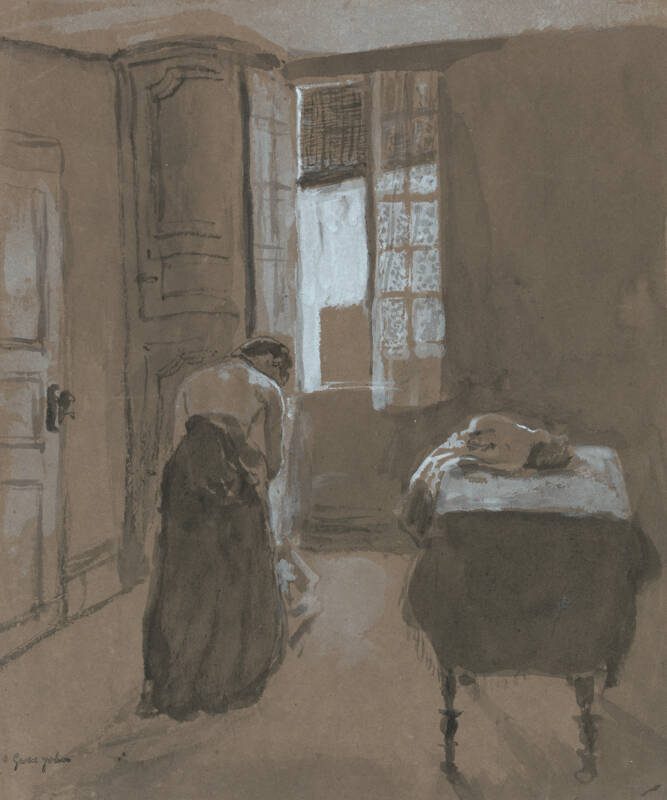
Her paintings have a lightness and magical luminosity that is wonderful to behold. Whether the subject is a building, a landscape, a night scene or a person, John expresses them in soft tones. She is a master of watercolour and light. The sense of stillness in her painting reflects the lifestyle she chose and so assiduously cultivated. Each work is an example of gentle but firm deliberation and delivery.
It was Augustus who enjoyed the lion’s share of acclaim and recognition during their lifetimes; he was the flamboyant extrovert in direct contrast with her choice of solitary lifestyle. However, critical opinion now tends to view John as the more talented of the two. Apparently even Augustus acknowledged this, and is reported to have said: ‘In 50 years’ time I will be known as the brother of Gwen John.’
The exhibition runs until October 8th. Catch it if you can.
Barbara, you capture the essence of Gwen John in a just short article. What an interesting artist.
Thanks again!
I so admire her independence of spirit.. as well as her painting!