
Hallo, can you hear me?

Do you have a smartphone? ‘Of course!’ I hear you reply. Do you have and use a landline? I would expect the reply to this to be somewhat different. I have one, but never use it; its sole function is apparently to ensure access to the home Wifi we pay for. My mobile phone contract allows unlimited calls so why would I pay extra to use my landline?
According to the BBC, nearly half of under-25s don’t even have a landline installed, while 95% of over-65-year-olds still have a traditional phone. In addition, nearly a quarter of us tend to avoid answering the landline when it does ring, because of the high chance it will be a nuisance call. Nevertheless around 2 million adults in the UK only have landlines, and many of these people are elderly and/or vulnerable.
Now a mobile-only life is marvellous if you live in a city with well-functioning full-fibre broadband, but what if you are in a remote area where mobile coverage is poor? At our friends’ house in Gloucestershire, they have no mobile reception at all. They rely on their landline and of course can now use their mobiles on Wifi; thank goodness for WhatsApp calls.
However, all this relies on a reliable electricity supply – something which may be at risk, as the National Grid is warning of possible power cuts this winter. If that happens, and your phone has not been recently charged, you might wish to turn to your landline if you still have one. Unfortunately, that too won’t be possible in the near future. Apparently the digital update of the telephone network means that corded landline phones will be powered from the home’s electricity supply as the old copper network is replaced. So no power at home = no landline phone calls.
It doesn’t take a genius to work out that if you are elderly or vulnerable and you suffer a power outage, then things could go wrong and you might need to contact a relative or neighbour for help, or perhaps call 999. That’s a bit tricky if your phone isn’t working.
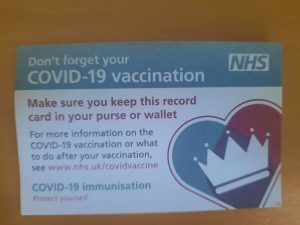
The digitisation of our lives races on; I now have to book online if I want to take my rubbish to the dump. This is not a problem for me, but what about those older people who find all this ‘just too much’? At the theatre the other week we were asked to produce either proof of vaccination or a negative Covid test result when presenting our (digital) tickets. Having not got round to downloading the relevant app on to my phone I took our two vaccination cards out of my wallet and showed them to the usher. The Gen Z girl peered at them doubtfully as if I were unrolling an ancient papyrus scroll.
It seems that we are having to submit increasing quantities of information just to carry on with our daily lives. There is one development on the horizon which in my view is taking matters too far in the wrong direction. The government plans to introduce mandatory proof of ID at elections in a bill currently passing through Parliament. This is despite there being very little evidence of electoral fraud. Many low-income people, particularly women, have neither passports nor driving licenses – the classic form of proof. Bring back the Pankhursts – we need them now.
I certainly share your concern Barbara. Too much, too quickly without the necessary care. ID at elections? Who thought that was a good idea?
Who indeed Joyce?!
Dame B