
Saved by the Pen
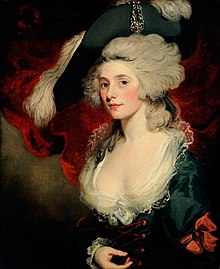
I finished off my last blog with some prescient – or perhaps perennial – lines from a poem highlighting the cruelties of poverty in winter. I stumbled across them while Googling ‘sneezing’, as you do, and made one of those serendipitous discoveries available only on the internet (though to be honest I’d happily live without them if all the horrors of the internet could be swept away).
The poet in question was Mary Robinson, a name I associated only with the former President of Ireland – she of the sonorous voice and campaigning liberalism. But yet again, how is it that poet, playwright, actor, novelist, feminist and all-round mega-star of her era Mary Robinson, born 1757, is no longer remembered?
Her story embodies the struggles that women had in the bad old days to keep their heads above water. (Essay question: To what extent have the bad old days staged a comeback in the 21st century?)
When Mary’s father left the family, her mother opened a school to support herself and her five children. Mary began teaching at the school at the age of fourteen. When her father closed the school down, Mary was pretty much railroaded into accepting a proposal from an articled clerk with an inheritance: Thomas Robinson. Though she resisted him at first, she felt indebted to him for taking care of her and her brother when they fell ill, and accepted him.
Sadly, Thomas failed to fulfil his early promise. The inheritance proved to be a fiction, Thomas squandered what little money they had on wine, women and song, and ended up in the debtor’s prison in Fleet Street, where Mary (still only eighteen) joined them with their infant daughter Maria. Writing and publishing poetry was one way to earn money while they lived in prison, and she published her first volume of verse in 1775.
On her husband’s release from prison, Mary returned to the stage (she had also begun acting aged fourteen), proving to be a hit in breeches roles such as Viola in Twelfth Night. It was her performance as Perdita in The Winter’s Tale, though, that brought her to the attention of the Prince Regent, who offered her £20,000 to become his mistress. She was at first reluctant, not wanting to be seen as ‘that sort of woman’, but the Prince seemed a better prospect than her feckless husband, and she eventually agreed – only he never paid up! Hard not to detect a pattern here. In the unlikely event that any of Mary’s descendants is reading this, I’d like to point out (are you listening, King Charles?) that £20,000 in 1780 is worth £4.6m in today’s money.
Left high and dry again, Mary found other protectors, and started to become known for her poetry and novels. Her friend Samuel Taylor Coleridge described her as ‘a woman of undoubted genius’, and her Gothic novel Vacenza had sold out by lunchtime on the day of its publication in 1792.
Robinson’s last piece of writing demonstrates the inspiration she found in feminism, and specifically the work of Mary Wollstonecraft. The poetry collection Lyrical Tales took as its themes, domestic violence, misogyny and political oppression.
I feel I am repeating myself when I say that she died in poverty, in 1800. Over the years she had supported not only herself, her mother and her daughter, but also her feckless husband and her lover Banastre Tarleton. Is this perhaps the definition of generous to a fault?