
The Life of Stuff:
Possessions, obsessions and the mess we leave behind
Susannah Walker, Penguin Books 2018

As I think I may have mentioned before, one of my intermittent concerns is about leaving a house full of unwanted stuff for my progeny to sort through. I know from experience that much of what to me are treasures loaded with sentimental value will be at best meaningless and at worst hideous to them. When my father-in-law died, items that each of his five offspring thought the others would want went round at the house clearing like a reverse pass-the-parcel, with nobody wanting to be left holding them as they’d never really liked them.
Part memoir, part social/cultural/historical/psychological document, The Life of Stuff explores the impact of the detritus we leave behind. When her mother dies, Walker is confronted by the inheritor’s nightmare: the hoarder’s hoard, filling every corner of a house gone to rack and ruin:’… the ceiling has caved in, great scrolls of lining paper and plaster dangling down around a dark hole where water has burst through; a matching dark stain in the carpet below.’
Having only lived with her mother until the age of eight, Walker has always found her something of an enigma. To say she seizes this opportunity to discover more about this remote yet elegant figure would be an overstatement – she steels herself to do it. But there could be no one better qualified to do so: Walker is a writer and lecturer on design, and sometime television director and producer who has worked on documentaries about hoarding.
By presenting the objects she uncovers – from a cookery book to a Tesco carrier bag (one of dozens, of course) as if they were exhibits in a museum, she makes us see the most mundane of them afresh. The Tesco carrier bag may be almost literally part of the landscape, fluttering beyond reach in a tree, but it is also a vital tool of the trade for the hoarder.
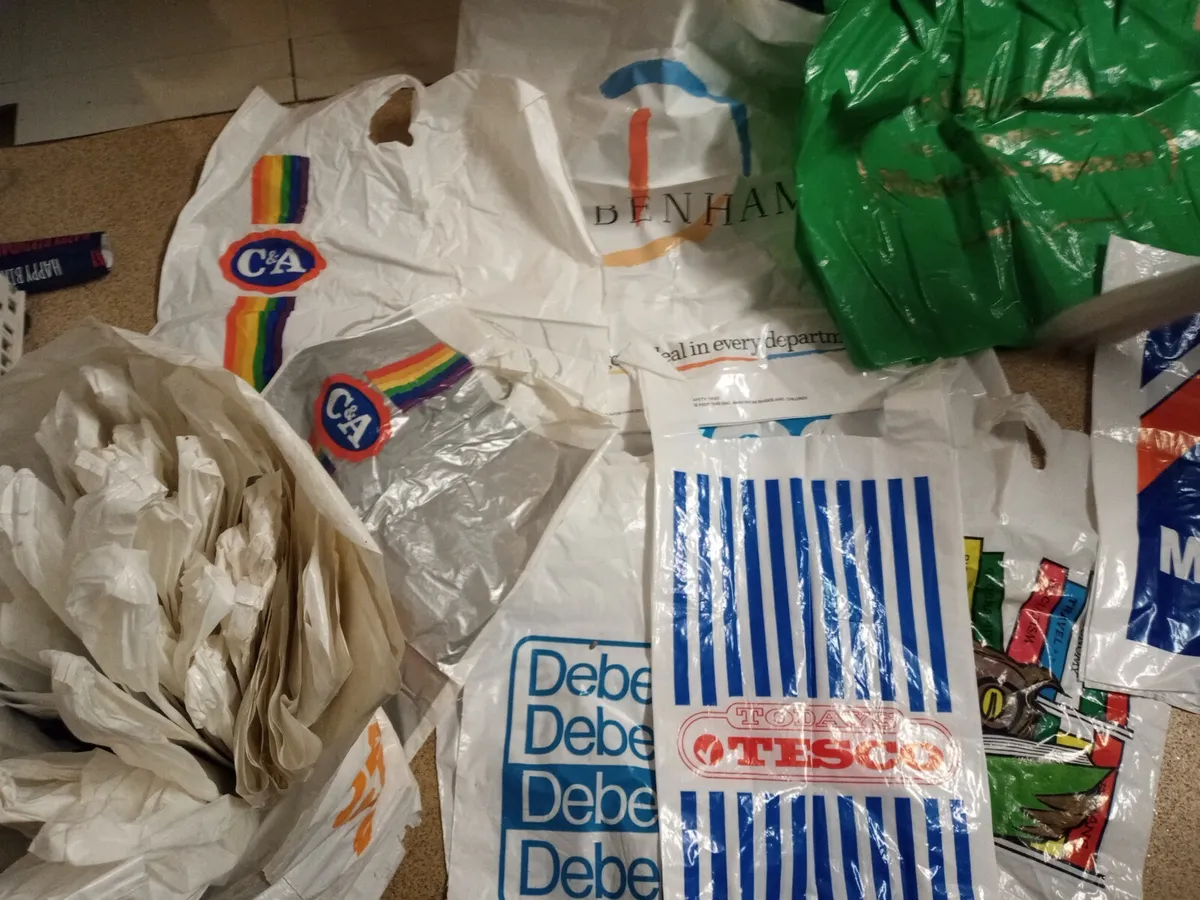
Walker’s archaeological dig through the many layers of stuff in her mother’s house, together with her researches into family history, bring her nearer and nearer to the traumas that have prompted the hoarding. She reconstructs the successive phase of her mother’s life, helped by the discovery of a timeline drawn up by her mother in which key events are distressingly recorded only as dots and happiness sadly fleeting.
The book is itself a variegated hoard of treasures: a sociological analysis of the meaning of napkin rings, scholarly descriptions of English china and Victorian interiors, a compare-and-contrast account of hoarding documentaries/reality TV shows on both sides of the Atlantic that is both unnerving and amusing, and a heartrending discovery – unearthed through painstaking research – of her great-great-grandmother’s death in Dickensian squalor.
It is not until some time after her mother’s death, and the clearing of her house, that the rage and grief come bubbling up, and there is nothing Walker can do until the roiling emotions recede. It makes for painful reading, but her clear-sighted and honest testimony is both moving and quietly encouraging. The dynamics of the family – which Dodie Smith called ‘Dear Octopus’ – are laid bare: despair tempered with persistent hope.
So much to relate to here.
I’m fascinated by the whole idea of hoarding especially on a grand scale. But most of it will mean nothing to other people. Anyone who has had to clear out a house after a death will recognise the poignancy of this.
In my case it was the boxes of photographs of unknown people, especially children.
A book of interest.
Thanks.
It has certainly reawakened the ‘do we keep our theatre programmes’ debate in our house!